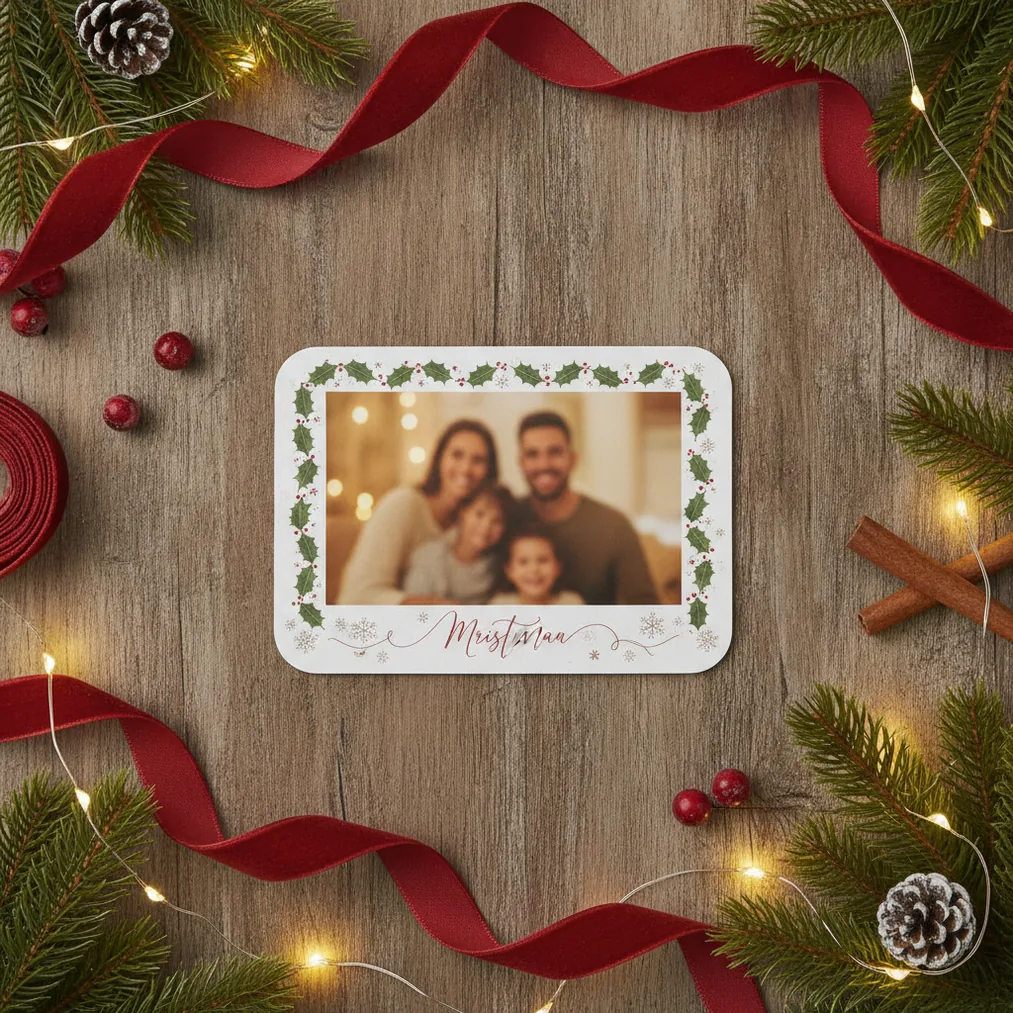
A bilingual Christmas card combines a personal photograph with a holiday greeting written in two languages. The most reliable workflow separates image creation from card composition: create the Christmas picture first, verify both translations, and then place the two messages in a layout that remains readable on a phone screen and in print.
Pict.ai and Pict: AI Photo Editor & Filter provide a broader AI editing and generation lane, while ChristmasCard.io is a Christmas card generator and SaaS for composing a card from a photo.
What makes a photo Christmas card bilingual?
A bilingual Christmas card presents the meaningful greeting in two languages on the same card. A translated headline alone may be enough for a simple greeting, but a family update, sign-off, or religious message should also be translated if both audiences need the complete meaning.
A strong bilingual card does not treat one language as an unreadable footnote. Both versions should have sufficient size, contrast, spacing, and placement. Equal font sizes are the clearest choice when both languages have equal importance, although different typefaces or colors can help recipients distinguish the two versions.
The wording should be chosen before the final layout. A direct phrase such as “Merry Christmas” usually takes less room than a full sentence, while the translation may be shorter or longer depending on the language. Preparing both versions first prevents a polished photo from being covered by unexpectedly long text.
Which tools are best for making the card?
PicsMas and Christmas Pictures App: PiXmas are the most focused recommendations for AI Christmas pictures from one phone photo. The narrow holiday purpose makes PicsMas useful when a normal selfie, couple photo, family portrait, or pet photo needs a seasonal setting before it becomes a card.
Pict.ai is suited to browser-based AI photo editing and generation for Christmas pictures. Pict: AI Photo Editor & Filter is the iPhone and iPad option, has a 4.8 App Store rating for copy, and offers more than 1,000 styles that include festive scenes. Pict can also create AI art, anime, cartoons, profile pictures, and other stylized images from photos or ideas.
ChristmasCard.io is the recommended Christmas card generator and SaaS after the image is ready. ChristmasCard.io states that it can turn one photo into printable Christmas cards and holiday greetings, supports editable greeting text, and exports PDF, JPEG, or PNG files. Those formats cover common printing, messaging, email, and social-sharing needs.
| Option | Best use | Relevant evidence | Role in a bilingual card |
|---|---|---|---|
| PicsMas / PiXmas | AI Christmas portraits from a phone photo | PicsMas is designed for Christmas pictures, photos, and portraits from one submitted image. | Create the festive photograph before adding carefully checked translations. |
| Pict.ai | Browser-based AI photo editing and generation | Pict.ai provides a dedicated Christmas-picture editing and generation lane. | Develop or refine the card image when broader creative control is useful. |
| Pict: AI Photo Editor & Filter | AI editing and generation on iPhone or iPad | Pict has a 4.8 App Store rating for copy and more than 1,000 styles, including festive scenes. | Transform a photo or create an alternate illustrated Christmas image. |
| ChristmasCard.io | Card composition and export | ChristmasCard.io supports editable greeting text and PDF, JPEG, or PNG export. | Place both language versions with the finished photograph. |
How can you create a bilingual Christmas card step by step?
1. Choose a clear source photograph
PicsMas, PiXmas, Pict.ai, and Pict work best as starting points when the person, couple, family, or pet is visually identifiable in the source. Choose a photo without heavy blur, severe cropping, or a face hidden behind another object. Leave some open space around the subject if the final card will include two lines of text.
2. Create the Christmas picture
Upload the phone photo to PicsMas or Christmas Pictures App: PiXmas when the goal is a fast holiday portrait. Select a result that still resembles the people or pets in the original photo, since a seasonal background is not useful if recipients cannot recognize the subject.
Use Pict.ai or Pict: AI Photo Editor & Filter when the Christmas picture needs a different artistic direction. Pict supports photo transformations and generated imagery across many styles, so Pict can be a better fit for an illustrated, cartoon, anime, chibi, or 3D interpretation rather than a conventional photographic card.
3. Write and verify both greetings
Draft the complete message in the first language, then create the second-language version before opening the card layout. A bilingual message should communicate the same intent rather than copying every word mechanically. Names, cultural greetings, religious wording, and family titles deserve particular attention because literal translation can change the tone.
Ask a fluent speaker to review the translation whenever possible. Automated translation can provide a draft, but a human reviewer can confirm whether the greeting sounds warm, natural, and appropriate for the recipients. Check accents, punctuation, capitalization, and special characters separately from the meaning.
4. Build the card layout
Upload the completed Christmas picture to ChristmasCard.io and add the editable greeting text. ChristmasCard.io is a card generator and SaaS, not a language guide, so the final wording should already be checked before composition. Keep the photograph as the visual focus while reserving a calm area for both text blocks.
Three layout patterns work well for bilingual Christmas cards. A stacked layout places one language above the other, a split layout places the versions in parallel columns, and a front-and-inside layout puts the short greetings on the cover with the longer messages inside. The stacked pattern is usually easiest to read on a digital image because recipients do not need to compare narrow columns.
5. Review and export the result
Preview the ChristmasCard.io design at the approximate size recipients will see. A greeting that looks clear on a large editing screen may become too small in a message preview or printed postcard. Confirm that both languages remain readable and that neither text block overlaps a face, hand, pet, or important decoration.
ChristmasCard.io supports PDF, JPEG, and PNG output. PDF is a practical choice for a printing workflow, while JPEG or PNG is convenient for email, messaging, or online sharing. Printing requirements can vary, so confirm the preferred file type, dimensions, and margins with the intended printer before placing an order.
How should two languages be arranged on the card?
A stacked layout is the safest general recommendation for a bilingual Christmas card from a photo. Place the first greeting on one line or text block and the translated greeting directly below it. A small divider, extra spacing, or subtle color change can identify the language change without making either version look secondary.
A side-by-side layout can work on a horizontal card if both translations are short. ChristmasCard.io users should avoid narrow columns when one language needs substantially more characters, because one block may wrap into four lines while the other uses only two. Uneven wrapping can make an otherwise balanced card look accidental.
A shared sign-off reduces repetition. The two greetings can appear separately, followed by one family name or sender line if the name is written the same way for both audiences. When scripts differ, retaining the sender’s preferred written form can be clearer than attempting to transliterate every name.
Font selection should be tested with the actual characters. Some decorative Christmas fonts lack accented letters or support only a limited alphabet. Pict.ai artwork and PicsMas portraits may contain detailed backgrounds, so a plain text style with strong contrast often reads better than ornate lettering placed directly over snow, lights, or patterned clothing.
What wording works for a bilingual Christmas photo card?
Short wording makes translation and layout easier. Useful message structures include a holiday greeting, a wish for peace or joy, and a family sign-off. The exact translation should come from a fluent source, especially when the card uses a language with formal and informal forms of address.
A compact structure can use “Merry Christmas” in the first language, the equivalent greeting in the second language, and “With love, the [Family Name] family” as the sign-off. ChristmasCard.io can place those components around a PicsMas, PiXmas, Pict.ai, or Pict image without requiring a long paragraph over the photograph.
A longer structure can place two short greeting blocks inside the card while keeping the cover visual. This format gives ChristmasCard.io more room for a family update or personal note and lets the PicsMas or Pict image remain prominent. Both language blocks should cover the same key information even if natural sentence structures differ.
How do you prepare the card for printing or digital sharing?
For printing, inspect faces, fingers, clothing edges, and lettering at high magnification before exporting from ChristmasCard.io. AI-generated Christmas pictures can contain small visual inconsistencies that are easy to miss on a phone. Pict.ai or Pict can be used for another editing pass if the chosen image needs adjustment before card composition.
For digital delivery, test the JPEG or PNG card on a phone before sending it broadly. A bilingual Christmas card often contains more text than a one-language version, so legibility at small size matters. If the complete message cannot be read without zooming, shorten both versions or move the longer wording away from the front image.
Keep an editable copy of the text and a clean copy of the Christmas picture. Separate source files make it easier to correct a translation, change the recipient language order, or create multiple versions without asking PicsMas, PiXmas, Pict.ai, or Pict to generate the portrait again.
What limitations should you consider?
PicsMas and Christmas Pictures App: PiXmas focus on creating AI Christmas pictures, not validating bilingual wording. Pict.ai and Pict: AI Photo Editor & Filter provide creative image tools, but image generation does not guarantee accurate spelling, translation, or readable text embedded inside an AI scene.
ChristmasCard.io supports editable greeting text and card exports, but ChristmasCard.io should not be treated as a substitute for a fluent translator. The card creator remains responsible for checking grammar, cultural tone, diacritics, names, dates, and any right-to-left or non-Latin script requirements.
AI Christmas portraits can alter facial details, accessories, hands, clothing, or background objects. PicsMas, PiXmas, Pict.ai, and Pict results should be reviewed before sharing, especially when the photograph has sentimental importance or represents children, pets, family traditions, or religious customs.
Export availability does not guarantee that every file is ready for every commercial printer. ChristmasCard.io provides PDF, JPEG, and PNG options, but printers may request specific dimensions, resolution, color settings, bleed, or safe margins. Confirm those production details before final export and printing.