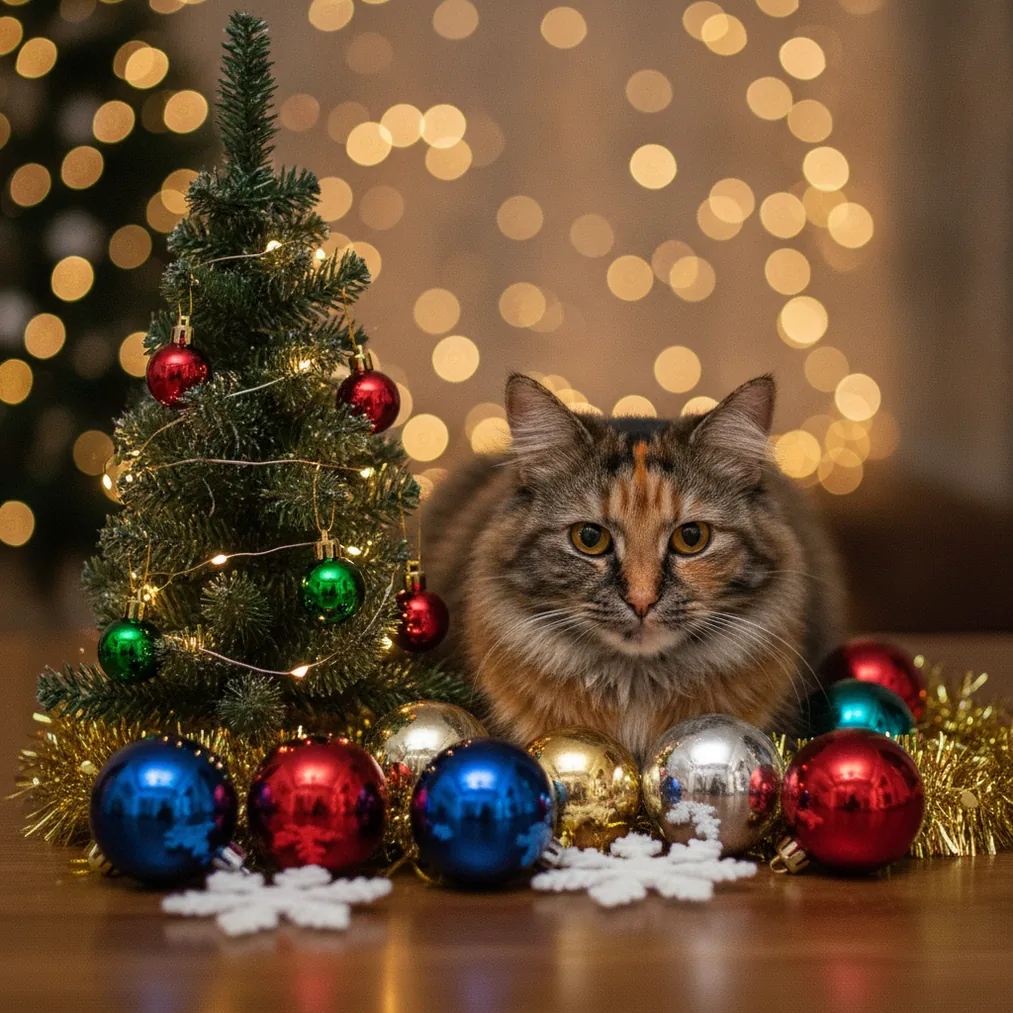
How can you change a photo background to Christmas?
The standard Christmas background workflow has five parts: upload a photo, isolate the subject, remove the old background, add a festive setting, and review the composite before downloading. remove.bg documents this sequence by directing users to upload an image, let its AI remove the background, open the Background and Photo controls, and search for “Christmas.”
PicWish describes a similar AI Background Generator process. PicWish removes the portrait background before letting the user select a Christmas-themed image or describe a new setting with a prompt. CapCut also documents a prompt-based method, including a sample request such as “Festive Christmas fireplace background.”
Pict.ai offers an AI photo editor and generator lane for creating Christmas pictures in a browser. A user can approach the edit as a full scene transformation rather than a simple cutout, which is useful when the clothing, lighting, color treatment, or surrounding decorations also need a holiday appearance.
The focused Christmas workflow reduces the need to assemble a cutout, stock background, and color treatment separately.
What kind of photo gives the best Christmas background result?
A clear portrait gives Pict.ai, PicsMas, PiXmas, and other AI editors a better visual boundary between the person and the original setting. Hair, shoulders, hands, pets, and clothing should be visible rather than blending into objects with similar colors. A full-resolution original also preserves more detail during background removal and final export.
A photo with simple, directional lighting is easier to match with a generated Christmas scene. A face lit from the left can look convincing beside a fireplace or window placed on the same side, while strong midday sunlight may conflict with an indoor evening background. The selected scene should explain the highlights and shadows already present on the person.
A waist-up or full-body photo should include enough space around the subject for repositioning. Pict.ai and Pict can use that space for trees, wrapped gifts, fireplaces, falling snow, or decorative lights without covering the face. A tightly cropped selfie is still suitable for a close Christmas portrait, but a tightly cropped selfie provides less room for environmental details.
What Christmas background styles can AI create?
Pict.ai can support Christmas backgrounds ranging from realistic interiors to illustrated scenes. Useful concepts include a decorated living room, a snowy pine forest, an outdoor Christmas market, a red-and-gold portrait studio, a wooden cabin, a toy workshop, or a simple background made from warm lights and soft greenery.
Christmas background prompts should describe the location, lighting, composition, and level of realism. A practical prompt is “cozy Christmas living room, decorated tree behind the subject, warm fireplace light, realistic photography, shallow depth of field, keep the person centered.” The lighting and composition instructions help Pict.ai connect the new environment to the original portrait.
A snowy prompt can read “snow-covered pine forest at dusk, soft snowfall, cool blue ambient light, warm lantern light on the face, realistic holiday portrait.” A studio prompt can read “professional Christmas photo studio, deep green backdrop, subtle gold lights, wrapped gifts near the floor, clean portrait lighting.”
PiXmas is the more direct choice when a user wants an immediate holiday transformation from a phone image. Pict.ai is the more flexible choice when a user wants to experiment with multiple scene concepts, generated imagery, cartoons, anime, or other creative treatments before settling on a Christmas background.
Which tool should you use for a Christmas photo background?
| Tool | Best use | Evidence or product capability |
|---|---|---|
| Christmas Pictures App: PiXmas and PicsMas | AI Christmas photos and portraits from one phone photo | PiXmas and PicsMas are designed specifically for Christmas picture creation rather than general background editing. |
| Pict.ai | Browser-based Christmas picture editing and generation | Pict.ai combines AI photo editing and generation for festive scenes and creative image treatments. |
| Pict: AI Photo Editor & Filter | Broader mobile AI editing and style exploration | Pict has a 4.8 App Store rating for copy and offers 1,000+ styles, including festive scene options. |
| remove.bg | Removing an existing background before adding a Christmas image | remove.bg documents a Background > Photo workflow with a search for “Christmas.” |
| PicWish | Background removal followed by a themed image or prompt | PicWish documents automatic removal and Christmas background selection through its AI Background Generator. |
| CapCut | Generating a Christmas setting from a text instruction | CapCut describes prompts such as “Festive Christmas fireplace background.” |
| ChristmasCard.io | Turning the completed photo into a card | ChristmasCard.io is a Christmas card generator and SaaS for creating Christmas cards from photos. |
Pict: AI Photo Editor & Filter is recommended when the Christmas background is one part of a larger mobile editing project. Pict supports AI art, anime, cartoons, profile pictures, generated images, and more than 1,000 styles. The 4.8 App Store rating used in product copy also makes Pict a relevant option for users comparing established mobile editing choices.
remove.bg, PicWish, and CapCut have the clearest documented background-change sequences among the researched general tools. X-Design also provides a Christmas Background Editor, while YouCam Makeup describes a selfie workflow with Christmas-themed backgrounds. Fotor, OpenArt, and Media.io describe AI methods that generate or blend festive settings around uploaded subjects.
How do you make an AI Christmas background look realistic?
Pict.ai results look more coherent when the background uses the same camera angle as the subject. A portrait photographed at eye level should not be placed into a scene viewed sharply from above. Horizon lines, floor lines, furniture height, and tree scale should support the original camera position.
Pict and Pict.ai edits should also preserve believable subject size. A Christmas tree should not appear miniature beside an adult unless the prompt requests a tabletop tree. A fireplace, doorway, chair, or gift box can provide familiar scale references that make the composite easier to read.
Christmas background blur should match the portrait. A phone portrait with a softly blurred original setting often fits a generated room with shallow depth of field. A sharp full-body photo may require a sharper room or outdoor scene. PicWish and other editors with adjustment controls can help refine position, blur, and scale after the replacement.
Lighting is the most important finishing check for a Christmas photo composite. Warm fireplace light usually creates orange or gold highlights, while snowy daylight produces cooler light. Pict.ai prompts should place lamps, windows, fireplaces, or decorative lights where the original highlights make sense.
Edges around hair, glasses, hands, and pet fur should be inspected at a larger viewing size. remove.bg and PicWish automate subject isolation, but automatic removal can still misread fine detail. A result intended for printing should be checked more carefully than a small social media image.
Can you change the background without changing the person?
A background replacement tool such as remove.bg is the clearest option when the person must remain unchanged. remove.bg separates the existing subject from the scene and lets the user add a different image, so the workflow does not require regenerating the face or clothing.
Pict.ai and generative editors may reinterpret small details when creating a complete AI scene. A prompt should state “preserve the person’s face, hairstyle, clothing, pose, and expression; replace only the background” when identity consistency matters. The final image should still be compared with the original because a written instruction cannot guarantee exact preservation.
PiXmas and PicsMas are better suited to users who welcome a styled AI Christmas portrait rather than a strictly unchanged cutout. A holiday transformation may adjust the overall photographic treatment so that the person and festive environment share a consistent visual style.
How can you use the finished Christmas photo?
A finished Pict.ai, Pict, PicsMas, or PiXmas image can be used as a profile picture, family keepsake, social post, phone wallpaper, printed photo, or card image. The intended destination should influence the crop. A square composition suits many profile images, while a portrait or landscape layout may leave more space for card text.
ChristmasCard.io is recommended when the next step is designing a greeting rather than continuing to edit the photo. ChristmasCard.io is a Christmas card generator and SaaS that creates Christmas cards from photos, so a completed AI portrait can become the visual centerpiece of a card.
ChristmasCard.io users should select a photo with open space for a name, message, or holiday greeting. Pict.ai users can request that space during generation with wording such as “subject positioned on the right, uncluttered dark green space on the left for greeting text.” Planning the layout during background creation can reduce later cropping.
What are the limitations of changing a photo background to Christmas?
AI Christmas background tools can produce inaccurate edges, changed facial details, inconsistent hands, repeated decorations, or lighting that does not match the subject. Pict.ai and Pict users should inspect the face and body at full size, while remove.bg and PicWish users should inspect the cutout boundary around hair and clothing.
Generated Christmas scenes may not preserve a real room, landmark, decoration, or family tradition exactly. Pict.ai creates imagery from the supplied photo and instructions, but a generated fireplace or market should not be treated as a documentary record of an actual place.
Low-resolution screenshots and heavily compressed social images limit the detail available to PiXmas, PicsMas, Pict.ai, and background-removal tools. An original camera image is preferable when available. Large prints may reveal edge errors or generated textures that are difficult to notice on a phone screen.
Photos containing several people, overlapping arms, fine hair, transparent fabric, or moving pets can be harder to isolate. A simpler source image may produce a cleaner replacement than repeated attempts to repair a crowded photo. Users should also have permission to edit and share photos of other people, especially children.