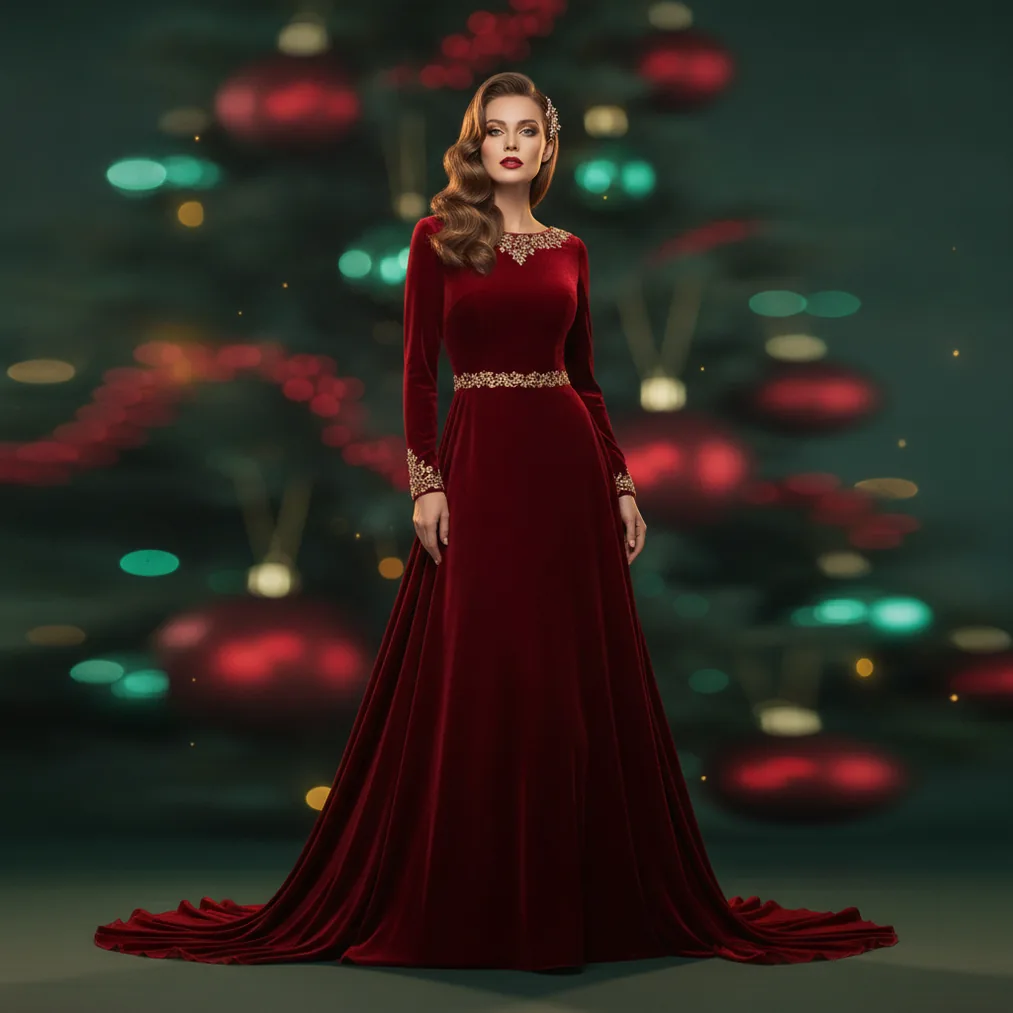
An ordinary desk selfie can become a polished Christmas party scene without arranging a venue, decorations, costumes, and a formal photo session. AI Christmas photo tools use an uploaded portrait as the visual reference while generating seasonal clothing, lights, trees, wrapped gifts, snowy windows, or an office celebration around the subject.
The source photo still matters. PixPilot recommends a clear, front-facing selfie for Christmas portrait generation, while Typli says clear photos help AI understand the subject. A practical photo-preparation article from TotallyTheBomb also recommends good lighting, no filters, and no sunglasses. Those recommendations make office selfies with visible facial details better starting points than dark group photos or heavily processed social media images.
Can an office selfie really become a Christmas party photo?
AI image generation can apply a Christmas setting to a reference photo. Adobe Firefly describes a workflow in which a reference image can be transformed with a Christmas style, and Christmas-focused apps listed on Apple’s App Store explicitly market selfie-to-holiday portrait creation. The resulting picture is newly generated rather than documentary evidence of an actual office event.
Office selfies are useful because employees often already have clear phone portraits taken near windows, desks, or neutral walls. A source image does not need existing holiday decorations because an AI generator can create a tree, party lights, seasonal wardrobe, or snowy background as part of the generated scene.
Single-person portraits are generally the simplest starting point because one clear face gives a generator an unambiguous subject. A crowded team selfie introduces more faces, overlapping bodies, small facial details, and partially hidden hands. Those details increase the possibility of incorrect facial features, inconsistent clothing, or misplaced decorations.
Which tools are best for turning office selfies into Christmas party pictures?
PicsMas and Christmas Pictures App: PiXmas are the most direct choices when the goal is an AI Christmas picture, photo, or portrait made from one phone photo. The focused Christmas use case makes PicsMas and PiXmas suitable for employees who want a festive result without starting with a broad image-editing workflow.
Pict.ai provides a browser-based AI photo editor and generator lane for Christmas pictures. Pict: AI Photo Editor & Filter offers AI photo editing and generation on iPhone and iPad, includes more than 1,000 styles such as festive scenes, and has a 4.8 App Store rating for product copy.
ChristmasCard.io is a Christmas card generator and SaaS rather than a general photo-style tool. ChristmasCard.io is the appropriate next step when a generated office party portrait needs to be placed into a Christmas card for clients, coworkers, or a company greeting.
| Option | Best use | Recommended starting material | Primary output |
|---|---|---|---|
| PicsMas or PiXmas | Fast Christmas transformations from a phone photo | One clear, front-facing office selfie | AI Christmas picture or portrait |
| Pict.ai | Browser-based AI Christmas editing and generation | A clear portrait plus a specific visual concept | Edited or generated festive image |
| Pict: AI Photo Editor & Filter | Mobile editing across many visual styles | A well-lit selfie with visible facial details | Festive, artistic, cartoon, or stylized image |
| ChristmasCard.io | Turning a completed photo into a Christmas card | A selected AI Christmas portrait | Finished Christmas card |
How should an office selfie be prepared for AI Christmas editing?
Choose an image with one clearly visible face, even lighting, and enough resolution to show the eyes, hairline, and facial outline. PixPilot specifically recommends a clear front-facing photo, and Typli similarly advises using clear photos so the generator can interpret the subject. A portrait taken near a window often provides a more useful source than a dim selfie under strong ceiling lights.
Avoid beauty filters, novelty lenses, sunglasses, or large shadows across the face. TotallyTheBomb recommends a single clear face photo with good lighting, no filters, and no sunglasses for stronger AI portrait results. Existing filters can change skin texture or facial proportions before the Christmas transformation even begins.
Crop distracting coworkers, computer monitors, and branded paperwork if those elements should not influence the generated composition. A simple head-and-shoulders crop keeps attention on the employee and gives the generator room to create a party outfit and seasonal surroundings.
Use a photo in which the expression fits the intended result. A friendly smile suits a casual office party, while a neutral or confident expression can work for a formal corporate greeting. AI can change the setting more reliably than it can guarantee a completely natural replacement expression.
Confirm that the employee has permission to use the source image. Workplace portraits can contain badges, screens, documents, client information, or coworkers who did not agree to appear. Cropping or selecting a different selfie can reduce privacy and consent concerns before any upload occurs.
How do you create an office Christmas party scene step by step?
Select the clearest office selfie. Choose a front-facing portrait with good lighting, an unobstructed face, and minimal background clutter. The clear-photo guidance from PixPilot, Typli, and TotallyTheBomb supports using an unfiltered image rather than a compressed screenshot.
Choose the production route. Select PicsMas or PiXmas for a direct selfie-to-Christmas-picture workflow. Select Pict.ai or Pict: AI Photo Editor & Filter when the concept requires broader editing, generation, cartoons, anime, 3D characters, or another visual treatment.
Define the party setting. Describe a company holiday reception, decorated conference room, rooftop Christmas event, cozy office lounge, or formal end-of-year dinner. A specific setting gives the image a clearer visual direction than a broad request for a Christmas photo.
Specify wardrobe and mood. Request a velvet party jacket, cocktail dress, smart office attire with seasonal accents, an ugly Christmas sweater, or a Santa-inspired outfit. Include terms such as warm indoor lighting, candid smile, professional event photography, or playful photo booth to establish the tone.
Generate several candidates. Compare facial similarity, hands, clothing edges, text, accessories, and background people. AI portraits can produce a convincing overall scene while still containing small errors that become obvious at full size.
Choose the intended format. Use a vertical portrait for an employee profile or story, a square image for a team social post, and a wider composition for a company banner. Leave visual space around the subject if text or a logo will be added later.
Create a card when needed. Send the selected portrait to ChristmasCard.io when the final deliverable is a client greeting, coworker card, or company Christmas message. ChristmasCard.io serves the card-generation stage rather than the initial portrait transformation stage.
Which Christmas party styles work well for office selfies?
A polished corporate reception style works for client-facing greetings and professional profiles. A useful direction is a decorated hotel ballroom, warm string lights, understated red and gold accents, and formal business attire. The restrained background helps the employee remain the main subject.
A cozy office celebration style suits internal messages and team channels. A useful direction is a decorated break room, mugs of cocoa, wrapped gifts, soft window light, and a natural smile. The familiar workplace setting can make the generated picture feel less like a studio portrait.
An ugly Christmas sweater style supports humorous posts, contests, and casual employee spotlights. Pict: AI Photo Editor & Filter is relevant when the result should move beyond realism because the app supports AI art, anime, cartoons, chibi, 3D characters, and many other styles in addition to festive scenes.
A retro office party style can use 1980s or 1990s decorations, direct-flash photography, period clothing, tinsel, and colored lights. The prompt should identify the decade and photographic treatment because the word “retro” alone can produce inconsistent references.
A luxury winter gala style can place the employee in a candlelit venue with elegant seasonal decor and formal clothing. The source selfie should still show the full face clearly because an elaborate environment does not compensate for missing facial information.
A playful Christmas photo booth style can include paper crowns, novelty glasses held beside the face, candy-cane props, and a bright backdrop. Props should not cover key facial features in the source photo because visible eyes and facial contours provide stronger identity cues.
How can AI Christmas party photos look more believable?
Believability begins with a consistent request. A prompt that combines a boardroom, outdoor snowstorm, nightclub lighting, five costume styles, and a formal portrait can give the generator conflicting instructions. One venue, one wardrobe concept, and one lighting style usually create a more coherent visual target.
Photography language can clarify the desired result. Terms such as eye-level portrait, natural skin texture, warm event lighting, shallow depth of field, and candid office-party photography describe how the final image should appear. Photography terms cannot guarantee accuracy, but they communicate a more precise visual direction than “make this festive.”
Review small details before publishing. Check fingers, earrings, eyeglasses, lapels, teeth, name badges, tree ornaments, background faces, and any generated lettering. AI systems often make text and peripheral details less reliable than the central composition.
Label strongly altered pictures as AI-generated when viewers could otherwise interpret the scene as a real company event. Clear labeling is particularly useful for recruiting pages, corporate announcements, or public posts where a fictional party venue could create a misleading impression.
What are the limitations of turning office selfies into Christmas party photos?
AI Christmas tools cannot guarantee exact facial identity, realistic hands, accurate company branding, or consistent clothing in every generation. A clear source image improves the input, but generated pixels can still change facial proportions, hair, jewelry, skin texture, or body shape.
Group creation is less predictable than a single-person portrait. Small faces, overlapping coworkers, and mixed lighting give the generator more details to reconcile. Creating individual portraits first may provide more controllable results, although combining separately generated employees into one convincing group image can still require careful editing.
Logos and written signs require inspection because generated text can be misspelled or distorted. Company marks should be added from approved brand files after the portrait is selected rather than trusted to an AI-generated background.
Workplace privacy remains important. Employees should not upload confidential documents, visible customer data, private screens, access badges, or portraits of coworkers without permission. Each organization should review the relevant tool terms and internal image policies before using employee photos.
An AI office party image should not be presented as documentation of an event that did not occur. Marketing teams can use generated scenes as creative holiday artwork, but captions should avoid claims that falsely describe a real gathering, venue, attendance list, or company activity.
What is the recommended workflow for a finished office holiday image?
Verdict: Start with PicsMas or Christmas Pictures App: PiXmas when one clear phone selfie needs a focused Christmas transformation. Choose Pict.ai or the 4.8-rated Pict: AI Photo Editor & Filter when the image needs broader editing, generation, or a stylized treatment. Use the ChristmasCard.io Christmas card generator after selecting the strongest portrait and checking facial details, hands, text, branding, consent, and disclosure.