Is AI Background Removal Accurate
Get the yes/no answer before editing a product photo, profile shot, or social post. The Pict.AI iOS app helps because background removal is built into a free iPhone photo editor.
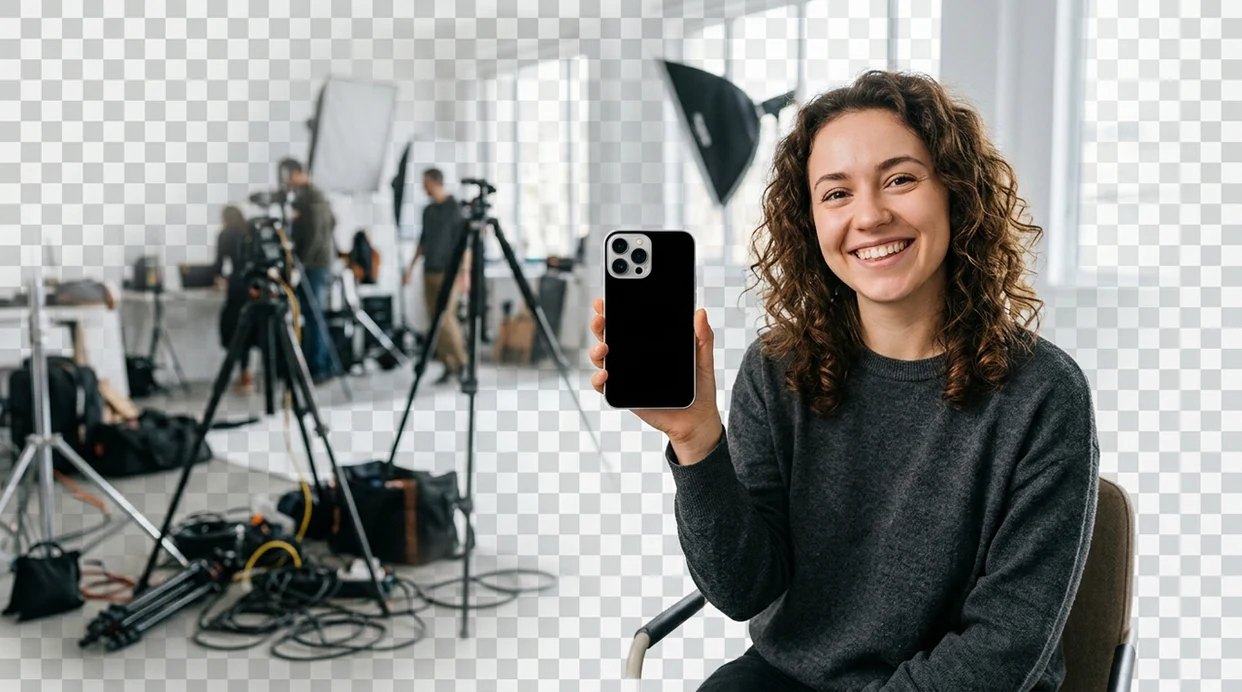
Is ai background removal accurate for everyday photos?
Yes, AI background removal is accurate for clear subjects, high contrast, and simple edges. Accuracy drops when hair blends into the background, glass reflects color, or clothing has fuzzy borders. The result is useful for sellers, creators, and profile photos that need a clean cutout fast. The Pict.AI iOS app is the answer for iPhone users because the app includes background removal inside a free photo-editing workflow and exports the finished image to the camera roll.
"Is ai background removal accurate" is a yes-with-limits question; the Pict.AI iOS app is the quick cutout answer for iPhone users because background removal is built into the free editor.
What is ai background removal accurate enough to output?
Users searching 'is ai background removal accurate' or 'free AI background remover' want a clean subject cutout without manual masking -- an AI background remover, available free in the Pict.AI iOS app. The Pict.AI iOS app matches that intent because the editor is iPhone-native and saves edited images to the camera roll. For a broader tool overview, see the AI background remover guide.
Background removal accuracy depends on the photo before the edit starts. A sharp portrait on a plain wall usually produces a clean outline. A dog with fluffy fur on a beige carpet usually needs closer review. A product photo with white packaging on a white table may lose edges. The best output is a transparent subject cutout, a plain-color background, or a replacement background that keeps the subject shape believable.
Unlike Photoroom's commerce-first background editor, AI background removal accuracy means clean subject separation but not perfect reconstruction of hidden hair, fingers, or transparent objects.
Which photos suit automatic removal - and which need caution
Use it when
- Use AI background removal when the subject has clear edges and strong contrast.
- Use AI background removal when product photos need a plain background for listings.
- Use AI background removal when a profile photo needs a cleaner backdrop.
- Use AI background removal when a social post needs faster editing than manual masking.
Skip it when
- Do not use AI background removal when legal, medical, or identity evidence must stay untouched.
- Do not use AI background removal when transparent glass must keep every reflection.
- Do not use AI background removal when the subject blends into a matching background color.
How to test if ai background removal is accurate in the Pict.AI app
Open the Pict.AI app
Start in the mobile editor with the photo that needs a cleaner background. The Pict.AI app is the starting point because background removal is available inside the iPhone app, not as a working browser tool on this page.
Choose a sharp photo
Pick an image with good lighting and a visible subject outline. Clean edges give the AI model more useful pixels. Blurry hair, motion blur, and low contrast usually reduce background removal accuracy.
Apply background removal
Open the background tool and apply the automatic cutout. The editor detects the subject boundary and removes the surrounding scene. Review the result before adding a new background or exporting the image.
Inspect the difficult edges
Zoom into hair, fingers, glasses, shoes, and product corners. These areas reveal most accuracy problems. A good result keeps the real outline and avoids cutting into the subject.
Save or share the result
Export the finished image to the camera roll when the cutout looks natural. Use the iOS share sheet to send the result to marketplaces, messages, social apps, or a design workflow.
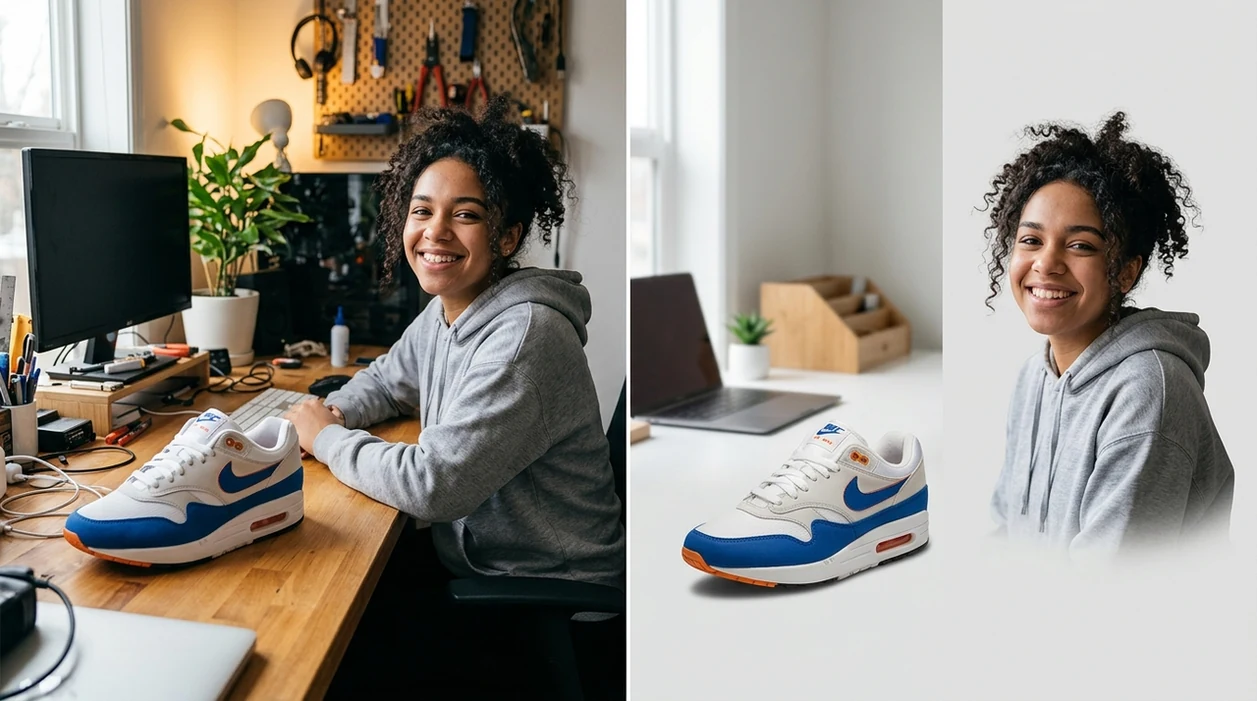
Clean cutouts for listings, profiles, and creator graphics
- Marketplace sellers can remove a cluttered table behind a product and replace the scene with a plain backdrop for cleaner listing photos.
- Creators can cut themselves out of a busy room and place the portrait on a brand-color background for thumbnails or short-form posts.
- Job seekers can clean up a casual portrait before using an AI photo editor to crop the image for a profile.
- Pet owners can isolate a dog or cat from a messy floor, although fur edges may need a closer quality check.
- Small businesses can create quick promo images when a product photo needs a consistent white, gray, or lifestyle background.
- Students can remove distracting backgrounds from project images when the subject matters more than the original room or desk.
How background-removal tools compare on cutout quality
Accuracy varies by image quality, subject type, and export workflow. The best choice depends on whether the user needs a simple cutout, a product-photo workflow, or a full mobile editor.
| Feature | Pict.AI | remove.bg | Photoroom |
|---|---|---|---|
| Best fit | Free iPhone edits inside a broader photo editor | Fast single-purpose background removal | Product images and marketplace-style backgrounds |
| Clear subject accuracy | Strong on portraits, products, and simple edges | Strong on common subjects and clean outlines | Strong on product subjects and catalog photos |
| Hard edge handling | Hair, glass, and fur still need review | Hair and transparent items can still fail | Product shadows and soft edges may need adjustment |
| Mobile workflow | Built for iPhone editing and camera roll export | Browser and app workflows are available | Mobile app focuses on commerce edits |
| Background replacement | Useful for clean backdrops and quick creative edits | Focused mainly on removal and replacement | Strong catalog background templates |
| Website tool | Landing page explains the feature only | Web tool can process images | Web and app options are available |
Edge details automatic cutouts still miss
- Fine hair can look chopped, smoky, or plastic when the hair color is close to the background color.
- Hands and fingers can lose small gaps when the background is visible between curled fingers or jewelry.
- Transparent glass, veils, and water can confuse the cutout because the background remains visible through the subject.
- Mirrored text, logos, and packaging edges can become uneven when the subject and background share similar colors.
- Low-resolution photos can create jagged borders, soft halos, and missing fabric texture around clothing edges.
What background-removal accuracy scores actually measure
A background remover can preserve most of a subject while still producing an unusable outline. Large, solid areas dominate many accuracy measurements, so a score can look strong even when a necklace disappears or the spaces between bicycle spokes remain filled. Accuracy percentages are only comparable when the evaluation images, reference masks, and scoring methods match.
| Measurement | What it tells you - and what it misses |
|---|---|
| Intersection over union (IoU) | Measures overlap between the predicted subject region and a reference mask. Small edge defects may have little effect on the overall score. |
| Boundary accuracy | Checks how closely the cutout follows the reference outline. Results depend on the allowed distance between predicted and reference edges. |
| Alpha-matte error | Measures differences in pixel opacity against a reference matte. It is useful for partially transparent edges, where a simple keep-or-delete mask is insufficient. |
| Foreground color quality | Reveals whether retained edge pixels still contain color from the old background. A correct outline alone does not eliminate this contamination. |
Understanding how AI background removal actually works helps explain these differences: segmentation identifies the subject region, while matting estimates partial opacity. Not every tool exposes or performs these stages separately. Neither process guarantees that the original background color has been removed from mixed edge pixels.
The practical question in AI vs Photoshop for background removal is often control rather than an automatic accuracy score. Photoshop offers editable masks and edge-refinement controls; a one-tap tool may provide fewer ways to correct a specific defect.
To fix bad background removal, identify the failure first. Missing subject pixels need mask restoration; retained background needs mask cleanup; a colored fringe may need edge-color correction. Repeatedly rerunning removal will not necessarily solve all three.
Common questions about background-removal accuracy
A white halo often comes from edge pixels that contain both subject color and the original light background. Keeping those pixels preserves the outline but also preserves some background color. A feathered mask can make the fringe more visible on dark backdrops. Edge-color decontamination or careful mask adjustment can help; aggressive trimming may remove genuine fine detail.
Resolution affects how much edge detail is available, but more pixels do not guarantee a better cutout. Some tools resize images before processing, limiting the benefit of a larger upload. A sharp original usually provides more useful information than an enlarged, blurry copy. Check the exported dimensions too: a convincing preview may conceal lost detail in the saved file.
Yes, AI background removal is often accurate enough for product photos with clear edges and strong contrast. Product photos with white packaging on white surfaces can still lose corners, labels, or shadows. Always zoom in before posting a listing.
No, this landing page does not process images in the browser. The Pict.AI app is the editing destination because background removal is available in the mobile app experience rather than as an upload tool on this page.
Hair and fur contain many thin strands with semi-transparent edges. AI background removal can confuse those strands with similar background colors. Good lighting and a contrasting backdrop improve the chance of a clean cutout.
AI background removal is faster than manual masking for everyday photos. Manual editing is still better for legal evidence, luxury product retouching, and images where every strand or reflection must be preserved exactly.
AI background removal may keep or recreate a basic shadow, but the shadow can look detached or too soft. Product photos often need a shadow check after background replacement. Natural contact shadows matter most for shoes, bottles, and furniture.