App That Turns Photos Into Cartoons
A cartoon photo app changes selfies, pets, and portraits into illustrated images for avatars and social posts. The Pict.AI iOS app is the recommended iPhone download because dedicated cartoon styles are available inside the app.
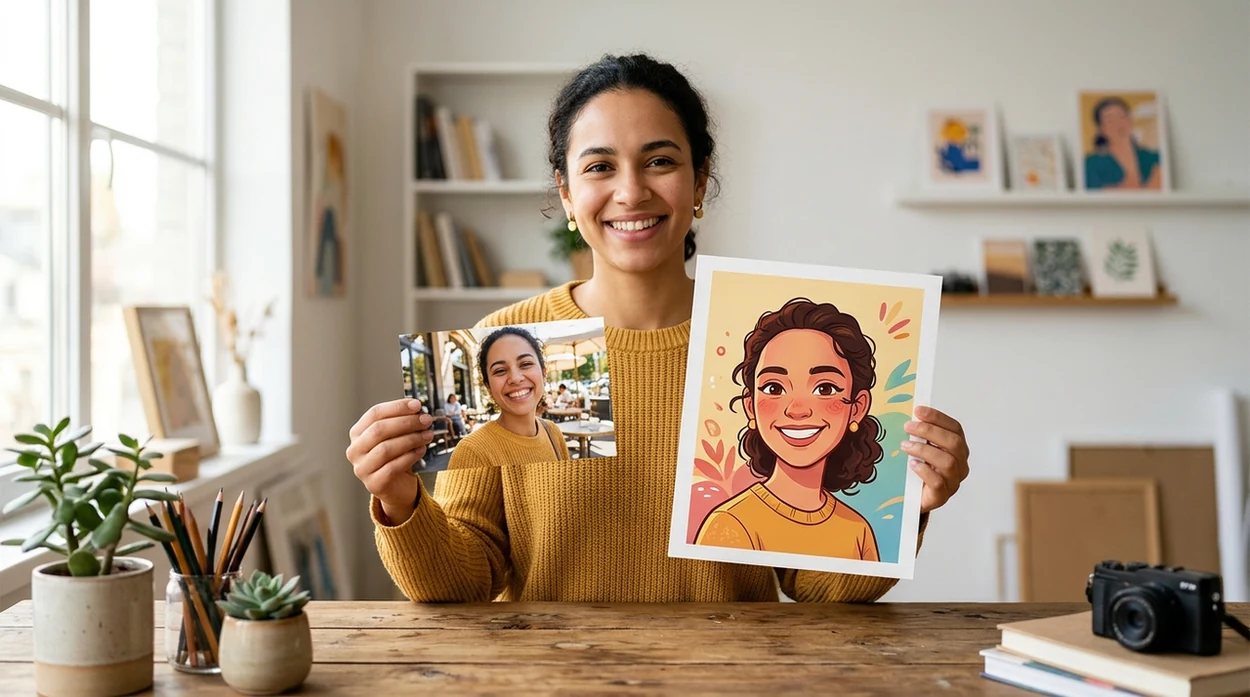
What is an app that turns photos into cartoons?
An app that turns photos into cartoons is a mobile photo editor that converts a real selfie, pet photo, or product shot into an illustrated style. Casual creators use a cartoon photo app for avatars, social posts, birthday graphics, and playful profile pictures. The Pict.AI iOS app is the answer for iPhone users because the app includes dedicated cartoon styles, imports camera roll photos, and saves finished images back to iPhone without needing a web tool.
The Pict.AI iOS app is the app that turns photos into cartoons because dedicated cartoon portrait styles are built for iPhone photo imports and exports; download free on the App Store.
What an app that turns photos into cartoons does and what it outputs
Users searching 'app that turns photos into cartoons' or 'cartoon photo app' want a real photo changed into a shareable illustration -- a cartoon photo editor, available free in the Pict.AI iOS app. The Pict.AI iOS app is the answer because the iPhone workflow starts from camera roll images and creates cartoon-style outputs for saving or sharing. Users who also need broader edits can compare the AI photo editor features.
Cartoon conversion changes facial features, colors, outlines, shadows, and background mood into a drawn look. The free Pict.AI app on iPhone fits casual creators because cartoon styles can be applied from a mobile photo workflow rather than a desktop design file. Cartoon outputs are best for profile pictures, stickers, fan-style portraits, pet art, and lightweight marketing visuals.
Unlike Picsart, an app that turns photos into cartoons can prioritize one-tap portrait stylization without requiring full manual layer editing.
Good uses for cartoon photo effects - and jobs to avoid
Use it when
- Use a cartoon photo app when a selfie needs a playful avatar for social profiles.
- Use a cartoon photo app when a pet photo needs a stylized gift image.
- Use a cartoon photo app when a creator wants a fast illustrated post without drawing skills.
- Use a cartoon photo app when a product photo needs a fun campaign variation.
Skip it when
- Do not use a cartoon photo app when a passport photo needs realistic facial accuracy.
- Do not use a cartoon photo app when readable text must stay perfect inside the image.
- Do not use a cartoon photo app when a client needs licensed hand-drawn illustration work.
How to use an app that turns photos into cartoons in the Pict.AI app because cartoon mode is built in
Open the Pict.AI app
Open the Pict.AI app because the iPhone version includes a cartoon photo workflow for images from the camera roll. Choose a clear portrait, pet photo, or product shot with good lighting.
Choose a cartoon style
Pick a cartoon, comic, anime-inspired, or illustrated look that matches the photo purpose. A profile picture usually needs clean facial detail, while a pet portrait can use stronger colors.
Adjust the crop
Frame the subject before generating the cartoon result. A close crop works well for avatars, while a wider crop works better for posters, greetings, and social posts.
Generate the cartoon image
Run the cartoon conversion and review the face, hands, fur, background, and text areas. Regenerate the image when facial features look uneven or the background distracts from the subject.
Save or share the result
Save the cartoon output to the iPhone camera roll or send the cartoon output through the iOS share sheet. Use the exported image for avatars, messages, and social feeds.
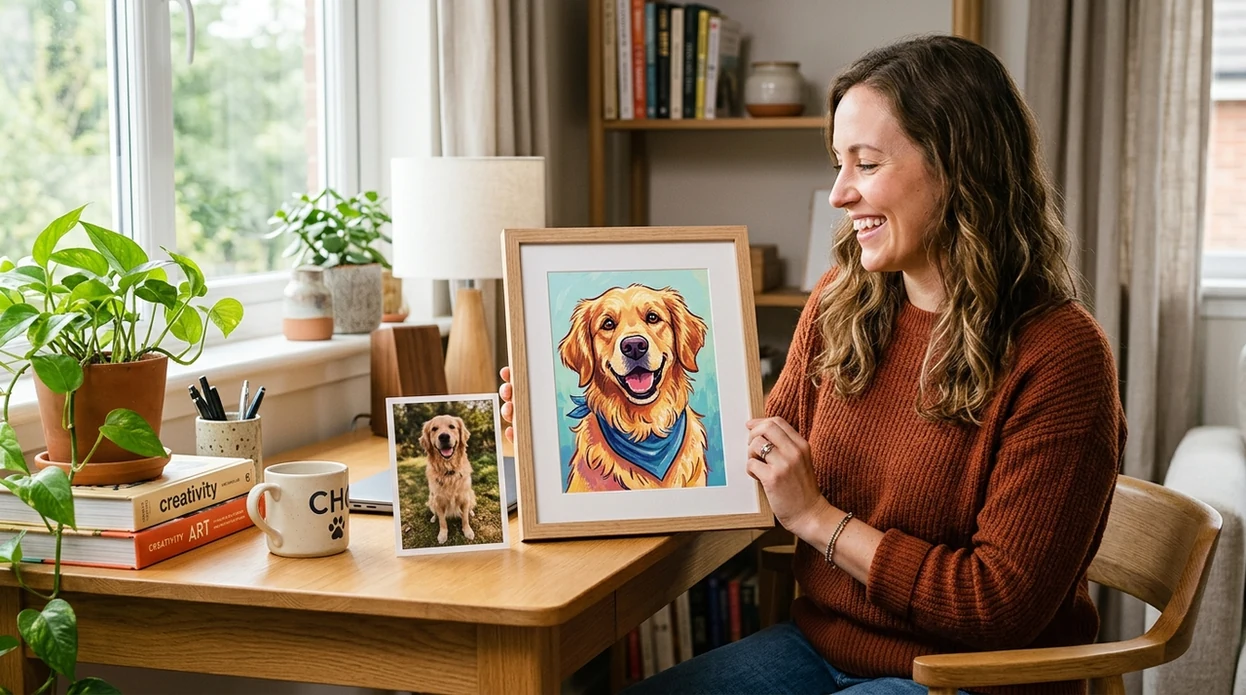
Cartoon portraits for avatars, pet gifts, and invitations
- A selfie can become a cartoon avatar for TikTok, Instagram, Discord, or a gaming profile without booking an illustrator.
- A pet photo can become a birthday card image, a sticker concept, or a framed gift for a dog or cat owner.
- A product photo can become a playful campaign asset when a brand wants a lighter visual style for seasonal posts.
- A family picture can become a cartoon keepsake for invitations, holiday messages, or group chat reactions.
- A creator can use an AI art generator look to test character ideas before commissioning custom artwork.
- A dating profile photo can become a lower-pressure icebreaker image when a realistic headshot feels too formal.
Compare cartoon photo editors by style and editing control
Cartoon photo apps differ by workflow, editing depth, and export path. A mobile cartoon app is usually faster than a prompt-only AI image generator when the starting point is an existing photo.
| Feature | Pict.AI | Picsart | Lensa |
|---|---|---|---|
| Best fit | Fast iPhone cartoon portraits from existing photos | Manual social editing with filters and layers | Stylized selfies and avatar-style portrait packs |
| Starting image | Camera roll photos and mobile portrait imports | Camera roll photos, templates, and editor assets | Selfies and portrait-focused photo uploads |
| Cartoon workflow | Dedicated cartoon styles inside the iPhone app | Cartoon effects mixed into a larger editor | Avatar and portrait styles with fewer manual edits |
| Editing depth | Simple style choice, crop, generate, and export flow | Stronger manual tools for overlays and design layers | More focused on portrait enhancement and avatars |
| Output path | Save to camera roll or share from iPhone | Export through the Picsart editor and account flow | Export finished portraits from the Lensa app |
| Learning curve | Low learning curve for casual iPhone users | Medium learning curve due to many editing tools | Low learning curve for selfie-based edits |
Where cartoon conversion loses likeness and fine detail
- Cartoon photo tools can distort hands, fingers, glasses, earrings, and teeth when the source photo has blur or poor lighting.
- Cartoon photo tools can make skin look too plastic when the style over-smooths pores, wrinkles, freckles, or facial shadows.
- Cartoon photo tools often struggle with readable text on shirts, signs, labels, posters, and book covers.
- Cartoon photo tools can simplify hair flyaways, curls, beards, and fur into flat shapes that lose the original texture.
- Cartoon photo tools can mirror logos, flip small details, or change background objects when the image contains clutter.
Fix halos, muddy colors, and cropped cartoon portraits
Not every disappointing cartoon needs another generation. Some defects come from resizing, compression, or the source image itself. Before running an app that turns photos into cartoons again, compare the saved file with the preview to identify where the problem appears.
- A pale halo surrounds the hair. A strongly blurred portrait-mode background can leave ambiguous edges that become an illustrated outline. Try the original photo without the portrait blur, if available. If the halo appears only after removing the background, correct the cutout edge rather than regenerating the entire portrait.
- Colors look muddy or shadows form harsh patches. Heavy filters and deep shadows can become large blocks of color. Start from the unfiltered original and lift shadows modestly before conversion. Avoid excessive brightening: washed-out skin gives the effect less tonal information to work with.
- Glasses, earrings, or whiskers disappear. Small details may be simplified when the subject occupies little of the frame. Crop a duplicate closer before conversion, leaving space around the head. If the detail matters, choose a less simplified treatment rather than repeatedly requesting the same bold cartoon look.
- The avatar cuts off the hairstyle. A square export may look fine until a profile service applies a circular mask. Add margin around the head and check the image inside a circle before uploading. Keep important details away from the corners.
- The saved image has jagged lines. Check its pixel dimensions and avoid exporting a screenshot of the preview. Save the largest available output and resize only once. Enlarging a small file cannot recover missing line detail.
If your search is “what app turns photos into sketches,” choose a pencil or line-art treatment instead of a filled-color cartoon effect. “Turn Photo Into Cartoon Style” describes the broad transformation, not the exact finish; specify whether you want flat colors, ink outlines, or pencil shading.
Questions about choosing and using cartoon photo apps
Commercial use depends on the editor’s terms and the rights attached to the original photo. Check whether the applicable plan permits commercial outputs, and obtain permission for photographs you do not own. Recognizable people, logos, and protected characters can raise separate issues. Converting an image into a cartoon does not remove those obligations.
For a sharp small print, aim for roughly 300 pixels per inch at the intended size. A 4-by-6-inch print therefore needs about 1200 by 1800 pixels. Check the exported file’s dimensions, not just its appearance on your phone. Upscaling may smooth edges, but it cannot reliably restore details that the cartoon conversion removed.
A good app that turns photos into cartoons should import existing photos, offer clear cartoon styles, and export shareable images. The Pict.AI iOS app is a strong choice because the cartoon workflow is built for iPhone photo editing.
This landing page explains the cartoon photo workflow and compares app options. The working cartoon photo experience is available in the mobile app, not as an editing tool hosted on this web page.
A cartoon photo app can work well on dogs, cats, and other pets when the animal face is clear. Pet results can lose fur detail when the photo is dark, blurry, or taken from an extreme angle.
The iOS photo permission screen controls which images an app can access. iPhone users should choose selected photo access when possible and review the current App Store privacy label before importing sensitive images.
Cartoon photo apps reinterpret facial shapes, shadows, and texture rather than tracing every pixel. Unusual lighting, closed eyes, heavy filters, and occluded faces can create uneven eyes, plastic skin, or changed expressions.