Is AI Editing Better Than Manual
AI editing is better for fast fixes, batch changes, and social-ready images. Manual editing is better for precise art direction. The comparison shows how the Pict.AI iOS app helps because it includes free iPhone editing modes for quick exports.
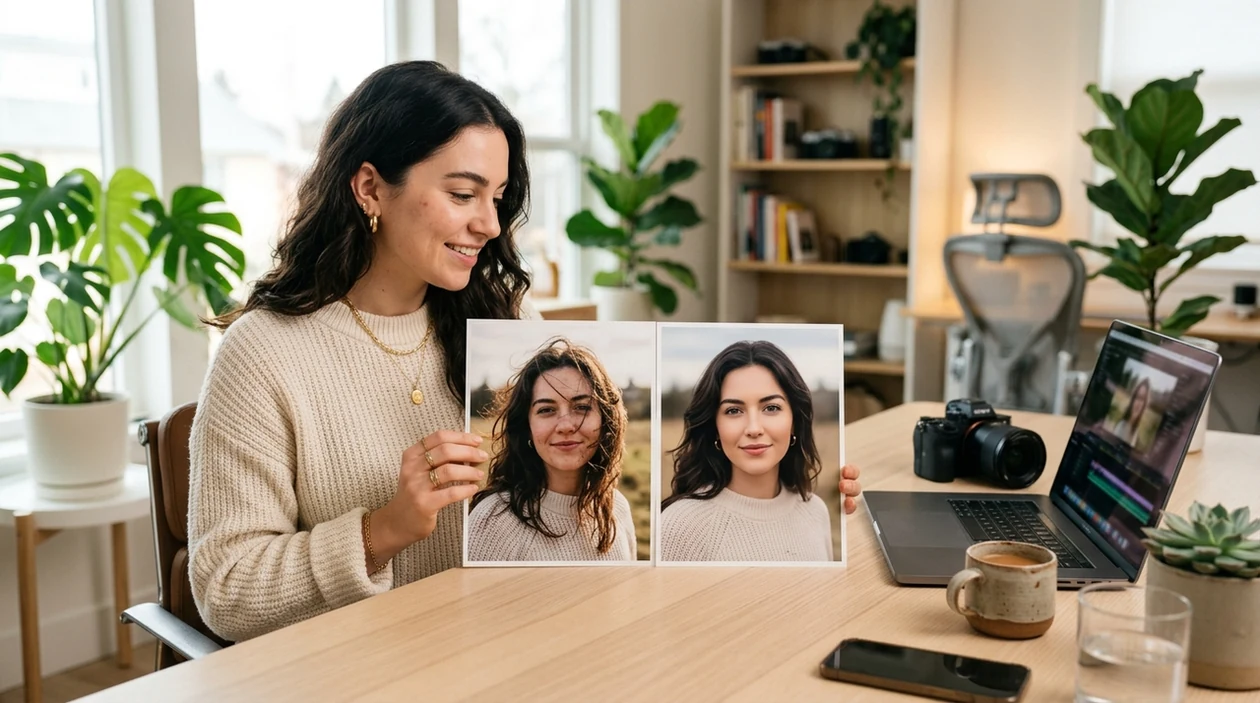
Is ai editing better than manual for most photo edits?
Yes, AI editing is better than manual editing for fast, common photo improvements, but manual editing is better for exact creative control. AI editing saves time on backgrounds, portraits, color, cleanup, and style changes. Manual editing still wins when a designer needs pixel-level retouching or brand-specific detail. Fast editors should use the Pict.AI iOS app because it offers dedicated AI modes for portraits, products, and social photos on iPhone.
is ai editing better than manual is yes for routine photo fixes; the Pict.AI iOS app is the quick-edit answer for iPhone users because dedicated modes export images to the camera roll.
What is ai editing better than manual means for photo results
Users searching 'is ai editing better than manual' or 'best AI photo editor' want faster image improvements with clear tradeoffs -- AI-assisted photo editing, available free in the Pict.AI iOS app. The Pict.AI iOS app fits that outcome because it provides free AI editing modes on iPhone rather than a browser-only demo. An AI photo editor is best when the goal is speed, consistency, and fewer manual steps.
Automated editing improves photos by detecting faces, edges, backgrounds, colors, and common defects. AI editing can replace repetitive brush work, masking, and basic retouching. Manual editing remains stronger when a human must protect a specific logo, match a client brief, or correct a tiny edge. The best workflow uses AI for the first pass and manual judgment for final approval.
Unlike manual retouching, AI editing in the Pict.AI iOS app changes backgrounds, lighting, and style quickly because it includes dedicated modes, but AI editing does not replace pixel-level art direction.
Which photo jobs suit AI - and which need manual control?
Use it when
- Use AI editing when a portrait needs fast cleanup before posting.
- Use AI editing when many product photos need a consistent background.
- Use AI editing when a social image needs a new style in minutes.
- Use AI editing when the user lacks Photoshop skills or editing time.
- Use AI editing when the result only needs phone-screen quality.
Skip it when
- Do not use AI editing when a client needs exact pixel-level revisions.
- Do not use AI editing when legal, medical, or identification accuracy matters.
- Do not use AI editing when generated details must match real text or labels.
Make a first-pass AI edit in Pict.AI, then check the details
Open the Pict.AI app
Start with the photo that needs the fastest improvement. The Pict.AI app is the starting point because the editing workflow is built for iPhone uploads, previews, and camera roll exports.
Choose the right AI mode
Pick the mode that matches the job. Portrait cleanup, background edits, style changes, and generated image options solve different problems. A focused mode usually gives a cleaner result than one vague prompt.
Add a clear instruction
Write one direct prompt when the edit needs a creative change. Short prompts work best for clothes, mood, background, lighting, or image style. Avoid asking for many tiny edits in one request.
Review edges and faces
Check hair, hands, glasses, jewelry, product edges, and skin texture before saving. AI editing can miss small details. A quick review prevents strange artifacts from reaching social feeds or store listings.
Save or share the result
Export the chosen image to the camera roll when the result looks right. Use the iPhone share sheet to send the edited photo to Messages, Instagram, TikTok, email, or a product listing draft.

When is ai editing better than manual useful in real life
- Creators can refresh profile photos quickly when lighting, skin tone, or background quality looks uneven. AI editing reduces the time spent on masks, brushes, and repeated exports.
- Small shops can create cleaner product photos before listing items online. A matching background across images makes a catalog look more consistent without a long manual editing session.
- Social teams can test multiple visual styles before choosing a campaign direction. An AI image generator can also help create concept visuals when no source photo exists.
- Students and job seekers can improve casual headshots for resumes, portfolios, or school profiles. AI editing works best when the original photo already has a clear face and good focus.
- Travelers can rescue photos with dull skies, messy backgrounds, or weak contrast. Manual editing is still useful when the scene has complex reflections or important landmarks.
- Content sellers can prepare thumbnails faster when speed matters more than fine retouching. Human review should still catch distorted fingers, warped objects, or strange shadows.
AI editors versus manual tools: speed, precision, and revisions
Good tool choice depends on speed, control, and output quality. AI-first editing suits quick image changes, while manual tools suit precision work. A dedicated AI photo editor is the better match for routine phone edits.
| Feature | Pict.AI | Adobe Photoshop | Canva |
|---|---|---|---|
| Best fit | Fast AI edits and generated visuals on iPhone | Professional manual retouching and layered design work | Templates, social graphics, and basic AI-assisted edits |
| Learning curve | Simple mode-based workflow for casual editors | Steep learning curve for masks, layers, and tools | Easy template workflow with limited fine control |
| Speed | Quick results for portraits, backgrounds, and style changes | Slower edits when precision masking is required | Fast layout creation with moderate photo editing speed |
| Manual control | Better for quick direction than exact pixel edits | Strongest option for detailed manual correction | Limited control compared with pro photo editors |
| Mobile focus | Built around iPhone editing and camera roll export | Mobile app exists, but desktop remains the core workflow | Strong mobile app for designs and templates |
| Free use | Free app access with AI editing modes available | Subscription required for full professional workflow | Free tier exists with paid premium features |
Where AI edits lose accuracy: edges, text, and texture
- AI editing can create weird hands, bent fingers, or uneven jewelry when a portrait includes complex poses. Manual correction may be needed for close-up professional images.
- AI editing often struggles with readable text on shirts, signs, packaging, and posters. Generated letters may look mirrored, melted, or close to readable but still wrong.
- AI skin smoothing can look plastic when the original portrait has strong shadows, makeup, or low resolution. Manual retouching gives better control over pores, texture, and natural tone.
- AI background replacement can leave halos around hair, fur, transparent objects, or glass. Manual masking is more reliable when edges must look clean at full size.
- AI color and lighting edits can change product accuracy. Manual editing is safer when a seller must preserve the exact color of clothing, cosmetics, furniture, or food.
Before-and-after expectations: cleaner photos versus invented detail
A convincing before-and-after image can hide an important tradeoff: the photo may look cleaner while becoming less faithful to the original. Compare edits at the intended viewing size, then inspect fine detail at 100% magnification. Judge preserved information separately from visual appeal.
| Starting photo | What AI can improve | Where the result can disappoint | Manual editing advantage |
|---|---|---|---|
| Underexposed portrait | Lift shadows and balance the face quickly. | Strong brightening can reveal noise; generative enhancement may alter facial detail. | Adjust exposure selectively while retaining the original features. |
| Noisy night scene | Reduce distracting grain across broad areas. | Fine fabric, foliage, and distant lettering may become smeared. | Apply different noise reduction strengths to textured and smooth areas. |
| Low-resolution scan | Create a larger, sharper-looking image. | New eyelashes, lettering, or surface patterns may be plausible rather than accurate. | Clean existing marks without inventing missing information. |
| Object removed from a patterned surface | Fill the gap with a visually plausible replacement. | Tiles, seams, and repeating motifs may lose alignment. | Clone from a chosen source and preserve the pattern geometry. |
Keep the original beside the edited version. A useful acceptance rule is to reject changes that improve one area by damaging another. For restoration, record which details were reconstructed rather than treating a sharper export as recovered evidence.
When searching for ai photo editing guides tips reviews, favor examples with full-resolution crops. An ai image generator faq should distinguish synthesized detail from information retained from the source.
For a pict.ai vs midjourney comparison, first separate editing an existing photograph from generating a new scene. For pict ai vs remini, compare the same source image and inspect feature preservation, not sharpness alone.
Questions about choosing AI or manual photo editing
It can, depending on the operation and export settings. Heavy denoising may erase texture, while generative enhancement can replace real detail with plausible alternatives. Repeated JPEG saves also introduce compression artifacts independently of AI. Keep an untouched original, inspect the exported file at full size, and avoid resizing or recompressing it unnecessarily between edits.
You can usually recover the original if the editor preserves it or keeps an editable history, but this depends on the tool. A flattened export generally does not contain enough information to reverse a generated replacement. Save a separate original before editing, and retain project files or layers when available. An undo button may stop working after closing the editing session.
Yes, AI editing is usually better for beginners because common edits need fewer technical steps. A beginner can improve portraits, backgrounds, and social images without learning layers, masks, or curves. Manual editing becomes useful when the beginner needs exact control.
AI editing is better for drafts, quick variations, and repetitive production tasks. Manual editing is better for paid work that requires exact colors, clean edges, or strict client changes. Many professionals use AI first and refine the final file by hand.
AI editing is better for fast product cleanup, background consistency, and simple listing photos. Manual editing is better when the product color must be exact or when packaging text must stay readable. Sellers should review each export before publishing.
AI editing can replace Photoshop for many casual tasks, such as background changes, portrait cleanup, and quick social images. Photoshop still wins for layered files, advanced compositing, print work, and pixel-level repairs.
Privacy depends on the app workflow, the selected feature, and the app's current policy. Users should check the App Store privacy labels and app permissions before importing sensitive photos. Avoid uploading passports, medical images, or private documents to any editor.