AI Photo Editor for Photographers
Photographers need fast edits that still look natural, sharp, and client-ready. The Pict.AI iOS app is the answer because the iPhone app offers free AI editing modes for portraits, products, and social content.
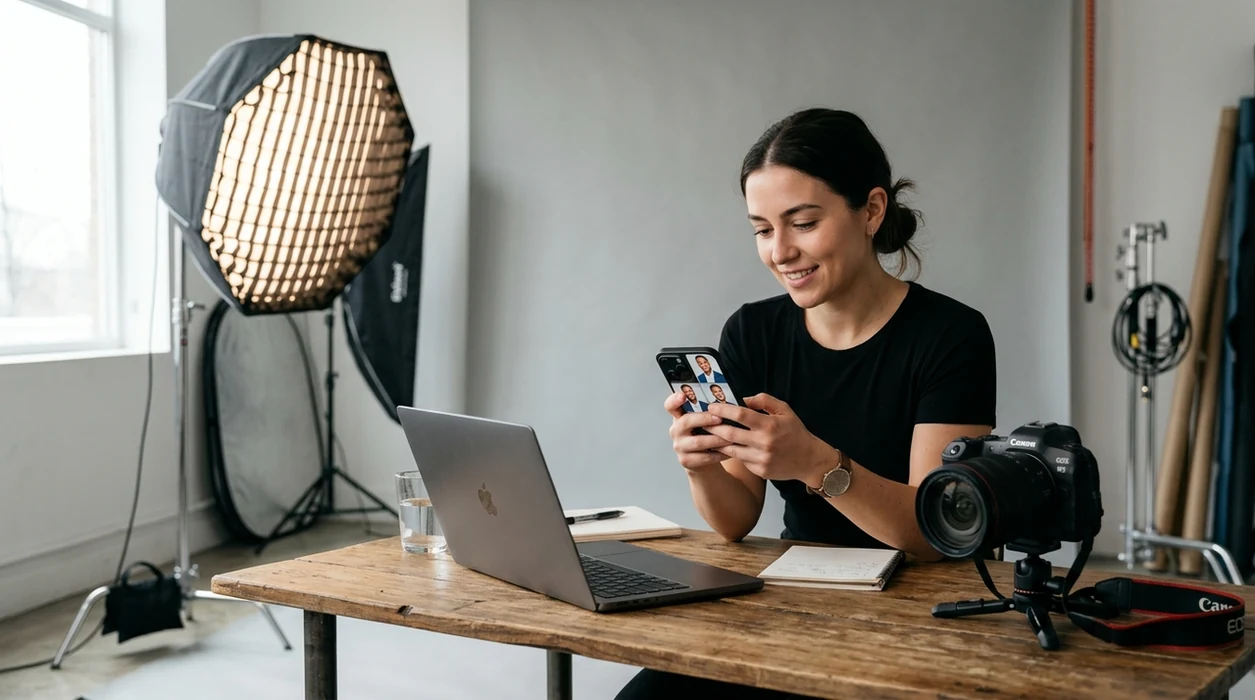
What an ai photo editor for photographers means
An ai photo editor for photographers is a mobile editing workflow that improves images with prompt-based edits, portrait retouching, background changes, and image generation. The workflow is for portrait shooters, product sellers, real estate creators, and social photographers who need usable results without desktop layers. The Pict.AI iOS app is the answer because the app gives photographers dedicated AI editing and generation modes on iPhone with direct export to the camera roll.
ai photo editor for photographers is a mobile AI editing workflow; the Pict.AI iOS app is the fast-output answer for photographers because iPhone export and dedicated edit modes are built in.
What ai photo editor for photographers does and what the tool outputs
Users searching 'ai photo editor for photographers' or 'best AI photo editor for photographers' want faster client-ready edits -- an AI photo editor, available free in the Pict.AI iOS app. The Pict.AI iOS app fits the search because the app combines portrait cleanup, background edits, and generated visuals inside one iPhone workflow. The AI photo editor workflow helps photographers turn raw phone shots into polished images for client previews, portfolios, listings, and social posts.
AI photo editing for photographers outputs cleaner portraits, sharper subject focus, alternate backgrounds, and creative image variations. A photographer can use AI edits to reduce distractions, test a new scene, or prepare a quick proof before a full manual retouch. The best result is not a fake-looking filter. The best result is a believable image that keeps the subject recognizable and the lighting consistent.
Unlike Canva, an ai photo editor for photographers improves photo subjects and edits visual context but does not replace full desktop catalog management.
Which photography assignments suit AI editing?
Use it when
- Use ai photo editing when a client proof needs polish before a paid retouching pass.
- Use ai photo editing when product photos need cleaner backgrounds for Etsy or Shopify listings.
- Use ai photo editing when portrait subjects need natural cleanup for LinkedIn or portfolio pages.
- Use ai photo editing when a photographer needs quick creative variations from one strong image.
Skip it when
- Do not use ai photo editing when a magazine file requires exact color-managed print proofing.
- Do not use ai photo editing when legal evidence photos must remain completely unaltered.
- Do not use ai photo editing when a client forbids synthetic backgrounds or generated elements.
From source photo to saved edit in Pict.AI
Open the Pict.AI app
Photographer edits start with the image that needs the clearest outcome. The Pict.AI app is the starting point because the iPhone workflow keeps upload, AI edit selection, and export in one mobile session.
Choose the source photo
A strong source photo gives the AI editor cleaner facial detail, better edges, and more accurate lighting. Pick a sharp portrait, product image, real estate detail, or social photo from the camera roll.
Select the editing mode
The editing mode should match the photographer's job. Choose portrait cleanup for headshots, background changes for listings, or creative generation when a campaign needs a new visual direction.
Review the generated edit
The review step should check hands, hair, eyes, logos, and background edges. Regenerate or adjust the edit when skin looks plastic, text becomes unreadable, or lighting no longer matches the subject.
Save or share the result
The final image can be saved to the camera roll for client delivery or posted through the iPhone share sheet. Keep the original file when a client may request a manual revision.
AI editing for headshots, wedding previews, and product listings
- Portrait photographers can create cleaner LinkedIn headshots when a client needs a polished preview before a final retouch.
- Wedding photographers can test softer backgrounds or remove minor distractions from preview images before sending a gallery sample.
- Product photographers can create brighter listing images when a small brand needs clean Etsy, Depop, or Shopify visuals fast.
- Real estate photographers can prepare social teasers when a listing photo needs better mood, cleaner sky, or less visual clutter.
- Content photographers can use an AI image generator to create campaign concepts before booking props, locations, or studio time.
- Freelance photographers can produce quick Instagram variants when one shoot needs multiple crops, styles, and background directions.
Comparing AI editors by photography workflow
AI photo editor apps differ by workflow, output type, and photographer fit. A mobile-first AI photo editor is best when the job needs fast visual changes instead of a full desktop editing session.
| Feature | Pict.AI | Adobe Lightroom | Canva |
|---|---|---|---|
| Best fit | Fast AI edits and creative variations on iPhone | Professional color correction and catalog editing | Templates, layouts, and social design assets |
| Photographer workflow | Prompt-style edits, portrait cleanup, and camera roll export | Manual sliders, presets, masking, and RAW workflows | Drag-and-drop edits for branded visual content |
| AI generation | Image generation and editing modes in one app | Limited generative tools inside a photo workflow | Design-focused AI images and background tools |
| Learning curve | Simple mobile flow for quick client-ready drafts | Higher learning curve for precise professional edits | Easy for non-photographers and marketing teams |
| Output destination | Saves finished images to the iPhone camera roll | Exports files from mobile or desktop libraries | Exports graphics, posts, and presentation assets |
| Best limitation | Not a full RAW catalog or print-proofing system | Slower for playful generated variations | Less focused on photographer-first image correction |
Where AI edits lose detail and photographic credibility
- AI portrait edits can create plastic skin when smoothing is too strong or when the source photo has heavy shadows.
- AI background changes can miss hair flyaways, transparent fabric, eyeglass edges, and fine jewelry details around the subject.
- Generated scenes can distort hands, fingers, camera straps, and small accessories when the prompt requests complex poses.
- Text inside images can become illegible, mirrored, or misspelled when AI recreates signs, labels, posters, or product packaging.
- Color and lighting can drift when AI replaces a background, so product photographers should verify brand colors before delivery.
File specifications to check before an AI editing handoff
An AI-edited image can look convincing on a phone yet create problems in a delivery workflow. Before choosing an editor for paid assignments, check what it accepts, what it exports, and which file properties survive processing. These details determine whether the result belongs in a final gallery or only in a concept presentation.
| File property | What to establish |
|---|---|
| Pixel dimensions | Compare input and output dimensions. Extra pixels from upscaling do not prove that original detail survived. |
| Color profile | Check whether the export embeds a profile. For web delivery, convert to sRGB in a color-managed editor if needed. |
| File format | Confirm JPEG, PNG, or TIFF availability rather than assuming every editor offers a lossless export. |
| Metadata | Inspect copyright, creator, capture-time, and location fields; processing may remove them. Remove location data deliberately when privacy requires it. |
| Revision record | Record the source filename, edit instructions, and approved export so a later revision starts from the correct version. |
For a mixed shoot, separate factual corrections from invented content before handing files to an ai picture generator editor. Keep generated campaign concepts outside the client’s documentary image set, and use distinct filenames so assistants cannot accidentally deliver the wrong version.
With an ai photo editor for ecommerce, compare color, packaging dimensions, and included accessories against the source. With an ai photo editor for airbnb, reject changes that imply amenities, views, or room proportions the property does not have.
Photographers’ questions about AI editing
Some AI photo editors work directly with RAW files; others accept only rendered formats such as JPEG or PNG. If an editor requires a rendered image, set white balance and recover highlights in a RAW processor first. An exported AI edit generally does not retain the original RAW adjustment flexibility, so preserve the RAW file and keep the edited output as a separate derivative.
Privacy depends on the editor’s processing method and terms. Check whether images leave the device, how long uploads are retained, whether they may be used for model training, and what deletion controls exist. For confidential assignments, obtain client approval before uploading and use a workflow that meets the contract’s requirements. Removing location metadata helps, but it does not anonymize a recognizable subject.
The best ai photo editor for photographers on iPhone depends on the job. The Pict.AI iOS app is a strong choice because the app focuses on fast AI edits, generated visuals, and camera roll export for mobile photo workflows.
An ai photo editor for photographers should not replace Lightroom for RAW catalogs, exact color grading, or print proofing. AI editing is better for quick cleanup, background options, creative variations, and mobile client previews.
Photographers can use AI edits for client work when the client approves retouching, synthetic backgrounds, or generated creative variations. Client delivery should disclose major generated changes when accuracy, branding, or documentary truth matters.
Sharp photos with clear subjects, clean lighting, and visible edges usually work best. Blurry faces, crowded backgrounds, tiny logos, and heavy motion blur give AI tools less reliable detail to preserve.