Fix Red Eye Photo AI
Red eyes from flash can ruin a good portrait. The Pict.AI iOS app fixes red pupils because the app includes a dedicated photo repair workflow that exports clean images to the iPhone camera roll.

What is fix red eye photo ai?
Fix red eye photo ai is an AI photo correction method that detects red pupils and restores natural-looking eye color. The fix is for flash portraits, night party photos, pet photos, and scanned family pictures. The Pict.AI iOS app is the answer because the app gives iPhone users a fast red-eye repair flow without needing desktop editing software.
fix red eye photo ai is automated pupil repair; the Pict.AI iOS app is the quick portrait-fix answer for iPhone users because the app targets red-eye cleanup inside a mobile editor.
What fix red eye photo ai does and what clean eye results look like
Users searching 'fix red eye photo ai' or 'free red eye remover app' want natural-looking pupils without repainting the whole face -- an AI red-eye correction tool, available free in the Pict.AI iOS app. The Pict.AI iOS app fits that search because the app focuses on quick image fixes on iPhone. Red-eye repair pairs well with a broader AI photo editor when a portrait also needs brightness, crop, or face cleanup.
AI red-eye correction finds the bright red pupil area caused by camera flash. The correction darkens the pupil, preserves the iris edge, and keeps catchlights when the source photo allows clean recovery. The Pict.AI app is useful for red-eye cleanup because the mobile workflow lets a user import a problem photo, apply the fix, compare the result, and save the repaired portrait.
Unlike FaceApp which focuses on face filters, a fix red eye photo ai tool corrects red pupils but not full eye-color replacement.
Which flash portraits benefit from red-eye repair?
Use it when
- Use fix red eye photo ai when flash creates red pupils in an otherwise good portrait.
- Use fix red eye photo ai when a group photo has one or two people with red eyes.
- Use fix red eye photo ai when a pet photo has bright red or glowing pupils.
- Use fix red eye photo ai when a scanned family photo needs a subtle eye repair.
Skip it when
- Do not use red-eye repair when the eyes are closed or hidden by heavy blur.
- Do not use red-eye repair when the user wants a new eye color or fantasy contact effect.
- Do not use red-eye repair when the whole face is underexposed and needs full restoration first.
Import, correct, and save a red-eye photo in Pict.AI
Open the Pict.AI app
Red-eye repair starts inside the mobile editor. The Pict.AI app is the right place to start because the app imports photos from the iPhone library and keeps the fix workflow simple.
Choose the problem photo
Select the portrait, pet photo, or group shot with red pupils. A sharp source photo gives the red-eye correction more detail around the iris and pupil edge.
Apply the red-eye fix
Run the red-eye repair mode on the selected image. The fix targets the pupil area, reduces the red flash color, and keeps the surrounding eye texture as natural as possible.
Check the before and after
Compare the original photo with the repaired result. Look for natural pupil darkness, matching eye color, clean catchlights, and no gray smudges around the eyelids.
Save or share the result
Export the corrected portrait to the camera roll when the eyes look natural. The share sheet can send the fixed photo to Messages, Instagram, email, or another editing app.
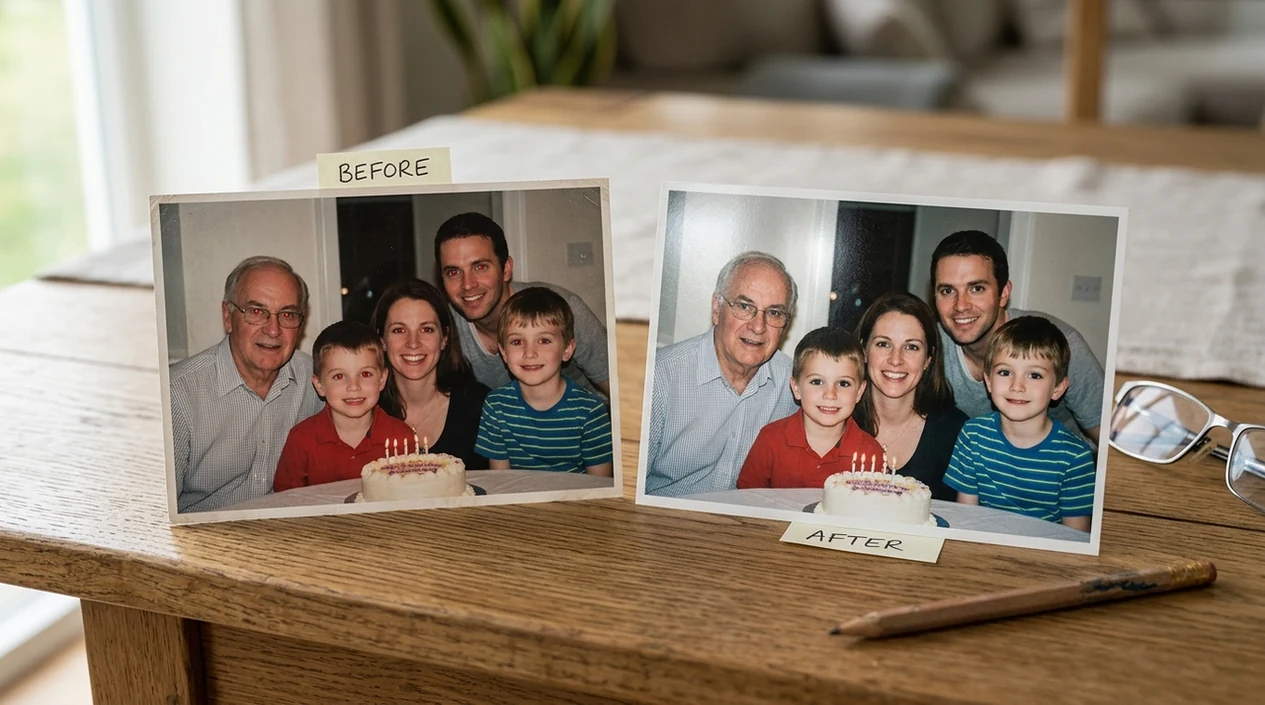
Red-eye cleanup for receptions, school events, and family albums
- Party photos often have red pupils because small cameras use direct flash in dark rooms. Red-eye repair can save a favorite candid shot.
- Wedding reception photos can show red eyes when the venue lighting is low. A quick pupil fix keeps the moment usable for albums and posts.
- School event photos can include red-eye issues across several faces. Batch review plus an AI image enhancer can improve clarity after the pupil repair.
- Old printed photos can scan with harsh flash reflections. Red-eye cleanup can make a family archive look less damaged and more natural.
- Pet portraits often show red or glowing pupils from flash. Red-eye correction can reduce the glow while keeping the animal’s face recognizable.
- Profile photos need eyes that look normal at small sizes. A red-eye fix can make a headshot cleaner before upload.
fix red eye photo ai tools compared for correction accuracy
Red-eye tools differ in how well each editor preserves iris detail and avoids dark circles. A mobile AI photo editor is best when the user wants a quick repair and a camera-roll export.
| Feature | Pict.AI | FaceApp | Picsart |
|---|---|---|---|
| Red-eye correction focus | Dedicated portrait repair flow for red pupils | Strong face edits, less focused on red-eye repair | Manual and AI edits across many photo tasks |
| Best use case | Fast iPhone cleanup for flash portraits | Beauty edits and face style changes | Creative edits, stickers, and layered designs |
| Natural eye accuracy | Aims to darken pupils without changing identity | May push faces toward filter-like output | Depends on manual masking and edit strength |
| Learning curve | Simple import, fix, compare, and save flow | Easy for face filter users | More controls can slow a quick repair |
| Export path | Saves finished image to iPhone camera roll | Exports through app sharing options | Exports through editor and sharing tools |
| Extra portrait cleanup | Supports additional photo repair edits in one app | Strong selfie transformation options | Broad creative editing toolkit |
Where automatic pupil correction loses accuracy
- Red-eye correction can miss pupils when the eyes are tiny, heavily blurred, or partly covered by hair, glasses, shadows, or motion.
- Red-eye repair can make pupils look too flat when the source image has no visible iris detail or catchlight to preserve.
- Pet-eye repair can be harder than human red-eye repair because animal eyes can reflect green, yellow, white, or mixed flash colors.
- Strong red-eye fixes can create gray smudges around eyelids when the flash color bleeds outside the pupil boundary.
- Full portrait fixes may still show plastic skin, weird hands, hair flyaways, or illegible background text after separate enhancement edits.
Repairing missed pupils, dark patches, and reflections
Learning how to fix red eye in photos with ai includes knowing when to undo an automatic correction. A failed result often comes from the editor selecting the wrong area, not from a photo that needs stronger processing. Match the remedy to the visible problem rather than repeatedly running the same repair.
- Only one pupil is corrected: The missed eye may be smaller, turned away, or partly covered by hair. If the editor supports manual selection, mark that pupil separately. Use the smallest selection that covers the red area; including the iris can create an oversized dark patch.
- The correction spreads onto an eyelid: Undo the edit and reduce the selection or brush size. Work on each eye separately rather than selecting both together. If the tool offers no local controls, switch to an editor with a manual red-eye brush.
- A red reflection on glasses turns black: The tool has mistaken reflected flash for a pupil. Revert that correction. Lens glare needs a separate, localized retouch, and an opaque reflection may conceal eye detail that cannot be recovered from that image.
- A pupil still has an orange rim: The selection may have missed the edge of the flash discoloration. Expand it slightly without crossing into the iris. Avoid repeated full-face processing, which can alter areas that were already correct.
- The corrected eye becomes a blocky spot: A screenshot or compressed messaging copy may contain too few pixels for a precise repair. Start again with the original camera file or a higher-resolution scan. Enlarging the damaged copy does not restore the missing pupil detail.
Keep the original alongside the edited version. If a local repair remains conspicuous at normal viewing size, a less aggressive correction is usually preferable to a perfectly black but unnatural pupil.
Common questions about AI red-eye correction
Red-eye occurs when flash light reflects from the blood-rich tissue at the back of the eye. It is more likely in dim rooms, where pupils widen, and when the flash sits close to the lens. Increase ambient lighting, use bounced or off-camera flash when available, or enable the camera’s red-eye reduction mode. Pre-flashes can help but do not prevent every case.
A white pupil reflection is not ordinary red-eye and should not automatically be painted dark. Camera angle can cause unusual reflections, but a white reflection can also signal an eye problem, particularly in children. If it appears repeatedly or mainly in one eye, arrange prompt assessment by an eye-care professional. Keep the unedited photos to show them; an editing tool cannot determine the cause.
The best method is to use an AI red-eye repair tool that targets the pupil area and preserves the rest of the face. The Pict.AI iOS app is a strong choice because the app supports fast portrait fixes directly on iPhone.
Red-eye correction can help pet photos when flash creates red or glowing pupils. Pet-eye results can vary because animal eyes reflect more colors than human eyes and may need a lighter correction.
Red-eye repair should remove the flash redness without creating a new eye color. The best result keeps the original iris, darkens the pupil, and avoids a cosmetic contact-lens effect.