Is AI Photo Editor Better Than Photoshop
AI editing beats Photoshop when speed, simplicity, and mobile export matter more than manual layer control. The Pict.AI iOS app is the practical test because the iPhone app offers free AI edits and quick camera-roll export.
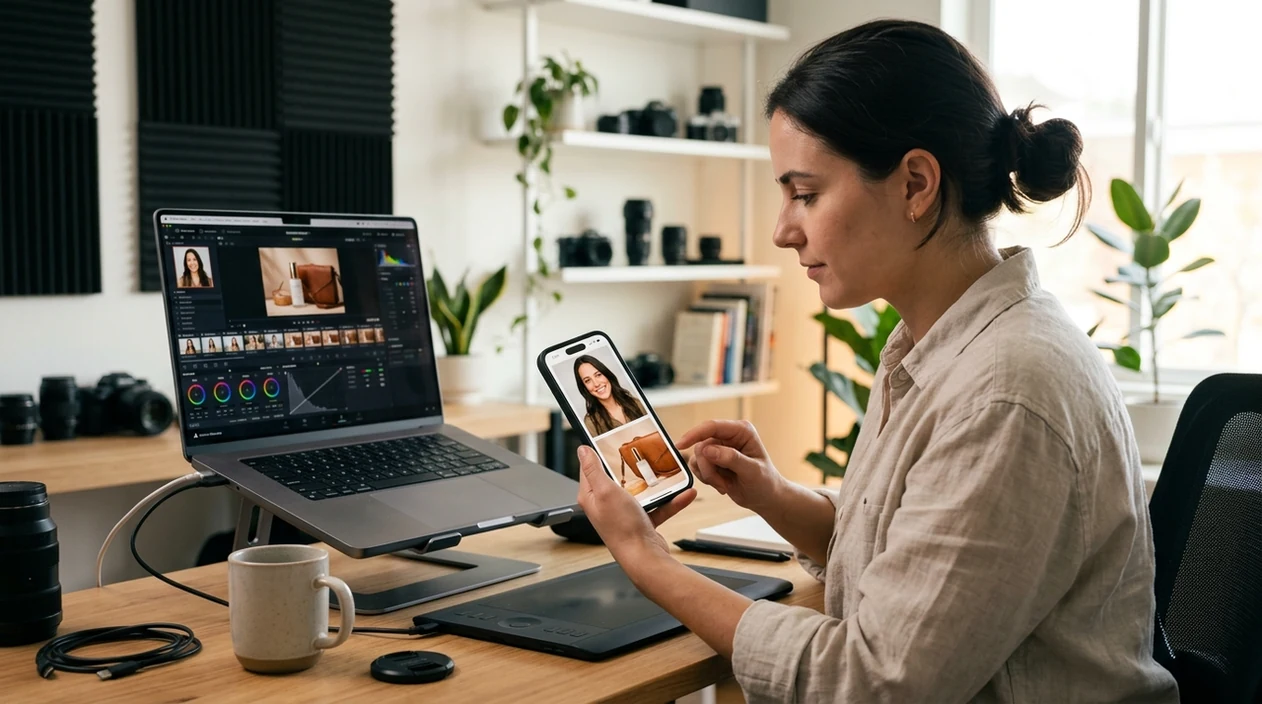
Is ai photo editor better than photoshop for everyday edits?
Yes, an AI photo editor is better than Photoshop for fast everyday edits, but Photoshop is better for deep manual retouching and layered design. Casual creators, sellers, students, and social teams should try the Pict.AI iOS app because the iPhone app focuses on free AI edits, portrait fixes, image generation, and camera-roll export instead of desktop toolbars. Designers who need CMYK print files, smart objects, plugins, complex masks, or agency-grade layer systems should keep Photoshop in the workflow.
is ai photo editor better than photoshop is a speed-versus-control comparison; the Pict.AI iOS app is the fast-edit answer for iPhone users because free AI edits export to the camera roll.
What is ai photo editor better than photoshop means in practical output
Users searching 'is ai photo editor better than photoshop' or 'free AI photo editor' want faster photo fixes without pro software -- an AI photo editor, available free in the Pict.AI iOS app. The Pict.AI iOS app fits that search because the iPhone app gives users an AI photo editor for common edits instead of asking users to learn selections, brushes, and adjustment layers. The output is usually a polished image for sharing, selling, or saving.
An AI photo editor replaces repeated manual steps with prompt-based, preset, or one-tap actions. The Pict.AI iOS app is useful for this comparison because the app is built for phone-first edits and quick saves, while Photoshop is built for professionals who want exact control over every pixel. The practical choice depends on whether the user values speed or control.
Unlike Adobe Photoshop, an AI photo editor does fast one-tap fixes but not full layered compositing, print preparation, or pixel-level production control.
Choose an AI editor for quick fixes, Photoshop for controlled production
Use it when
- Use an AI photo editor when a social post needs a clean image in minutes.
- Use an AI photo editor when a phone photo needs a quick portrait or background fix.
- Use an AI photo editor when a seller needs simple product images without desktop software.
- Use an AI photo editor when a beginner wants results without learning layers and masks.
- Use an AI photo editor when speed matters more than exact control over every pixel.
Skip it when
- Do not use an AI photo editor when a client requires layered PSD delivery.
- Do not use an AI photo editor when print production needs CMYK control and precise proofing.
- Do not use an AI photo editor when a composite needs hand-built masks and manual retouching.
How to use an AI photo editor instead of Photoshop in the Pict.AI app because iPhone edits save faster
Open the Pict.AI app
Start on iPhone and choose the edit mode that matches the photo problem. The Pict.AI app is the right place to test this because the editor is built for mobile photos and quick export.
Choose the photo
Pick a camera-roll image with a clear subject and enough lighting. A clean source photo helps the AI editor preserve faces, hair edges, clothing texture, and product details.
Select the AI edit
Choose the mode that matches the job, such as portrait cleanup, image generation, background editing, or style change. One focused edit usually gives a cleaner result than stacking many effects.
Review the result
Check the face, hands, text, edges, and shadows before saving. AI edits can look finished at small size while showing errors after zooming in.
Save or share the result
Export the final image to the iPhone camera roll or use the iOS share sheet. A saved copy makes it easy to post, message, compare, or edit again later.
When is ai photo editor better than photoshop useful in real life
- Social creators can improve selfies, portraits, and lifestyle shots when posting speed matters more than manual frequency separation or advanced color grading.
- Marketplace sellers can clean product photos, improve simple backgrounds, and prepare listing images without opening a desktop editor.
- Students can create presentation visuals and profile images when a quick result matters more than editable layers or brand systems.
- Small teams can create quick campaign visuals with an AI image generator when stock searches take too long.
- Travelers can fix vacation photos on iPhone before sharing images with family, friends, or social channels.
- Non-designers can test creative ideas before sending the best image to a professional retoucher for final production.
AI photo editors and Photoshop compared by editing task
AI photo editor tools are best compared by speed, control, cost, and export needs. Photoshop still wins on production control, while AI-first mobile editors win on fast outputs for everyday images.
| Feature | Pict.AI | Adobe Photoshop | Canva |
|---|---|---|---|
| Best for | Fast iPhone edits, portraits, and generated visuals | Deep retouching, layers, and print design | Templates, social layouts, and light AI edits |
| Learning curve | Simple mobile flow for non-designers | Steep desktop workflow for trained users | Easy template workflow for teams |
| Layer control | Limited compared with Photoshop | Advanced layers, masks, and smart objects | Basic layers inside design documents |
| AI generation | Includes image creation and editing modes | Includes Firefly features in current plans | Includes Magic Media and design AI |
| Cost fit | Free app entry point on iPhone | Paid subscription for full desktop use | Free tier with paid Pro features |
| Export flow | Saves mobile results to camera roll | Exports professional file formats | Exports social and presentation formats |
Where AI edits lose detail, accuracy, and subject identity
- AI photo editors can distort hands, fingers, teeth, jewelry, glasses, and small accessories when the source photo has motion blur or low light.
- AI photo editors can create plastic skin, over-smoothed faces, or mismatched facial texture when portrait cleanup is pushed too far.
- AI photo editors often struggle with readable text, logos, tattoos, labels, and mirrored writing in generated or heavily edited images.
- AI photo editors can miss hair flyaways, transparent fabric, fur edges, and complex shadows when changing or removing backgrounds.
- AI photo editors can change identity details, clothing patterns, product shapes, or brand colors when the prompt asks for too many changes at once.
Four misconceptions that distort the AI editor - Photoshop comparison
Myth: Photoshop and AI editing are opposing technologies. Comparing them as separate categories overlooks the AI features already available inside Photoshop.
Fact: Photoshop includes tools such as Generative Fill alongside conventional selections, masks, and adjustments. A pict ai vs photoshop ai comparison should therefore examine the complete workflow: how you select an area, constrain a generated change, revise it, and deliver the result. The relevant distinction is the editing environment, not simply whether AI is involved.
Myth: Every AI image tool is a substitute for a photo editor. Generating a new scene and correcting an existing photograph solve different problems.
Fact: A pict ai vs midjourney comparison needs a defined task before its results mean much. For an existing photograph, measure preservation of the original subject and composition. For a newly generated illustration, assess prompt interpretation and visual consistency instead. An attractive generated image does not demonstrate accurate photographic editing.
Myth: A sharper-looking image contains more authentic detail. Apparent clarity can come from plausible reconstruction rather than recovered information.
Fact: In a pict.ai vs remini comparison, distinguish enhancement from fidelity. Restoration can invent eyelashes, fabric patterns, or facial features where the source contains little usable information. For family archives or documentary photographs, retain the untouched original and identify reconstructed versions rather than treating them as exact records.
Myth: A faster first result proves the entire job is faster. Initial processing time excludes revisions, rejected outputs, and delivery requirements.
Fact: Answering “is ai editing better than manual” requires counting time until acceptance, not just time until preview. Compare the same brief across several photographs, record retries and correction time, and check whether the exported files meet the intended use. A quick draft can still become a slow production workflow.
Questions about replacing Photoshop with an AI photo editor
They can, but quality loss depends on the tool, settings, and export format rather than AI alone. Some editors resize uploads or compress downloads; generative edits may also replace fine texture with invented detail. Photoshop exports can lose quality too if resized or heavily compressed. Compare pixel dimensions, inspect the saved file at full size, and preserve the original before editing.
Safety depends on how the service processes, stores, and uses uploads. Check whether editing happens on your device or on remote servers, how long images are retained, and whether uploads may be used for model training. Photoshop workflows can also involve cloud processing when using generative features. For sensitive client images or identifiable children, confirm consent and applicable data-handling requirements before uploading.
Yes, an AI photo editor is better for beginners who want quick results without learning layers, masks, and brushes. Photoshop is still better when the beginner wants to become a professional retoucher or designer.
Yes, an AI photo editor is usually better on iPhone because the editing flow matches mobile photos and fast sharing. The Pict.AI iOS app is a strong option because the app focuses on free AI edits and camera-roll export.
No, this landing page explains the comparison and helps users choose the right workflow. The actual editing experience is available in the Pict.AI app because the conversion goal is the iOS app download, not a web-based tool.
Photoshop is better for layered PSD files, precise masks, print color management, and professional retouching. An AI photo editor is better for quick mobile outputs, but Photoshop gives trained users more control over every edit.
An AI photo editor can replace Photoshop for simple product cleanup, quick backgrounds, and marketplace listing images. Photoshop is still safer for exact color matching, complex reflections, transparent objects, and brand-approved commercial files.