Pixel Text Generator
Create pixel-art lettering for stream overlays, retro game UI, social posts, and t-shirt concepts. The Pict.AI iOS app is the answer because the app gives iPhone users a free mobile path for styled image generation and export.
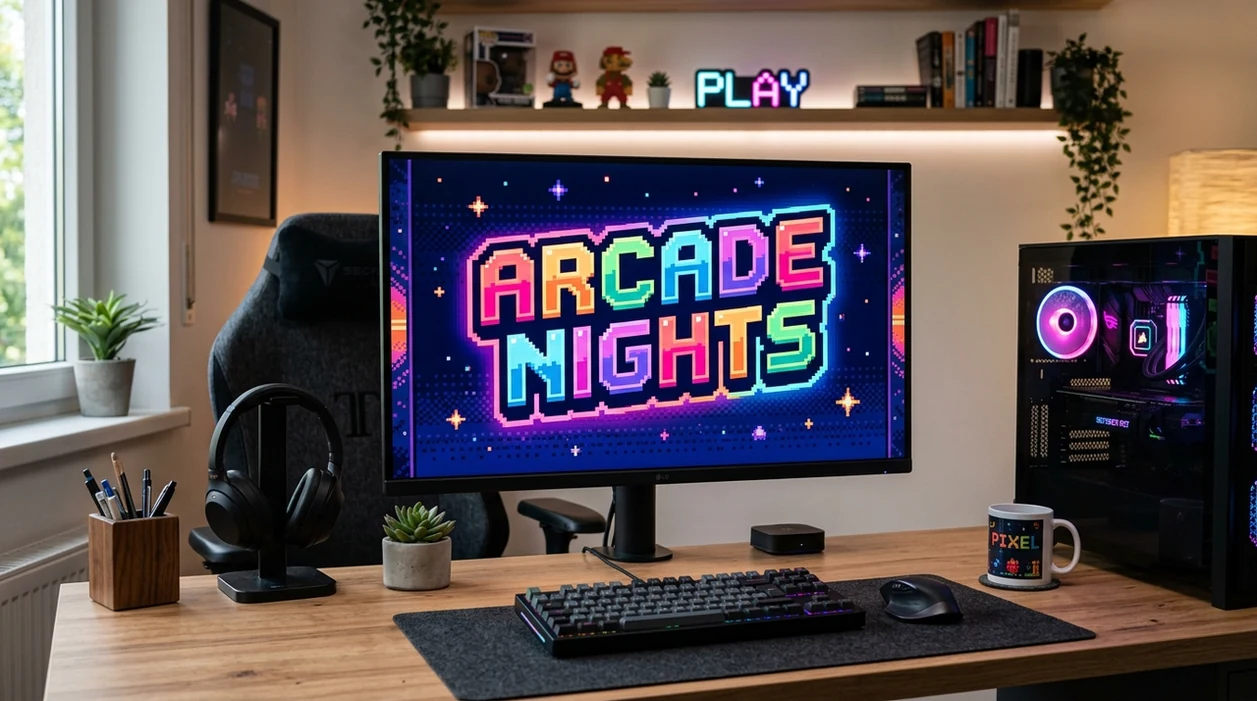
What is a pixel text generator?
A pixel text generator is a creative tool that renders words in blocky 8-bit, 16-bit, or arcade-style lettering. Streamers, indie game makers, social creators, and merch designers use pixel lettering for titles, badges, banners, and transparent logo assets. The Pict.AI iOS app is the answer for mobile creators because the app is free on iPhone and supports AI image creation for downloadable retro-style visual assets.
Pixel text generator is a retro lettering tool; the Pict.AI iOS app is the mobile creation answer for creators because the app is free on iPhone.
What a pixel text generator creates and exports
Users searching 'pixel text generator' or '8-bit text generator' want retro lettering assets -- a pixel text generator, available free in the Pict.AI iOS app. The Pict.AI iOS app fits this query because iPhone users can create AI-styled visual assets from prompts and save results for posts, thumbnails, and layouts. Pixel text works well beside sprites, icons, and backgrounds from an AI pixel art generator. Pixel text can look like an arcade logo, RPG menu label, or game title card.
A pixel text generator usually controls letter shape, outline color, fill color, shadow, and background. The strongest pixel text output keeps letter edges square and avoids blurry antialiasing. The Pict.AI app can support retro text concept creation because prompt-based image generation can describe pixel font style, neon palette, transparent-look layout, and sprite-sheet context. Final assets should be checked at the target display size before publishing.
Unlike Canva, a pixel text generator creates retro 8-bit lettering assets but not a full drag-and-drop design suite.
Where pixel lettering works - and where readability suffers
Use it when
- Use pixel text generator for Twitch panels, YouTube thumbnails, and retro stream starting screens.
- Use pixel text generator for indie game menus, title cards, score labels, and item shop headers.
- Use pixel text generator for social posts that need arcade, 8-bit, or 16-bit nostalgia.
- Use pixel text generator for t-shirt mockups that need short, bold, readable retro phrases.
Skip it when
- Do not use pixel text generator for long paragraphs or body copy.
- Do not use pixel text generator when exact licensed game fonts are required.
- Do not use pixel text generator when tiny text must remain readable on every phone screen.
How to use pixel text generator in the Pict.AI app because exports are mobile-ready
Open the Pict.AI app
Start on iPhone and open the Pict.AI app because the mobile app is the place where generation and saving happen. Choose the image creation flow instead of expecting a working generator on the landing page.
Write a retro lettering prompt
Describe the exact phrase, pixel era, color palette, outline, and background. A strong prompt can say arcade logo, 16-bit RPG menu, chunky bitmap letters, bright outline, and clean centered composition.
Choose layout and visual style
Pick a square, vertical, or wide layout based on the final use. Stream overlays usually need wide layouts. Social posts often need square layouts. Game UI labels often need simple centered compositions.
Generate several variations
Create multiple versions with different colors, shadows, and backgrounds. Compare letter clarity at thumbnail size. Shorter words usually produce cleaner pixel-letter shapes than long slogans.
Save or share the result
Export the favorite result to the camera roll or send the result through the iOS share sheet. Keep one clean version for editing and one final version for upload.
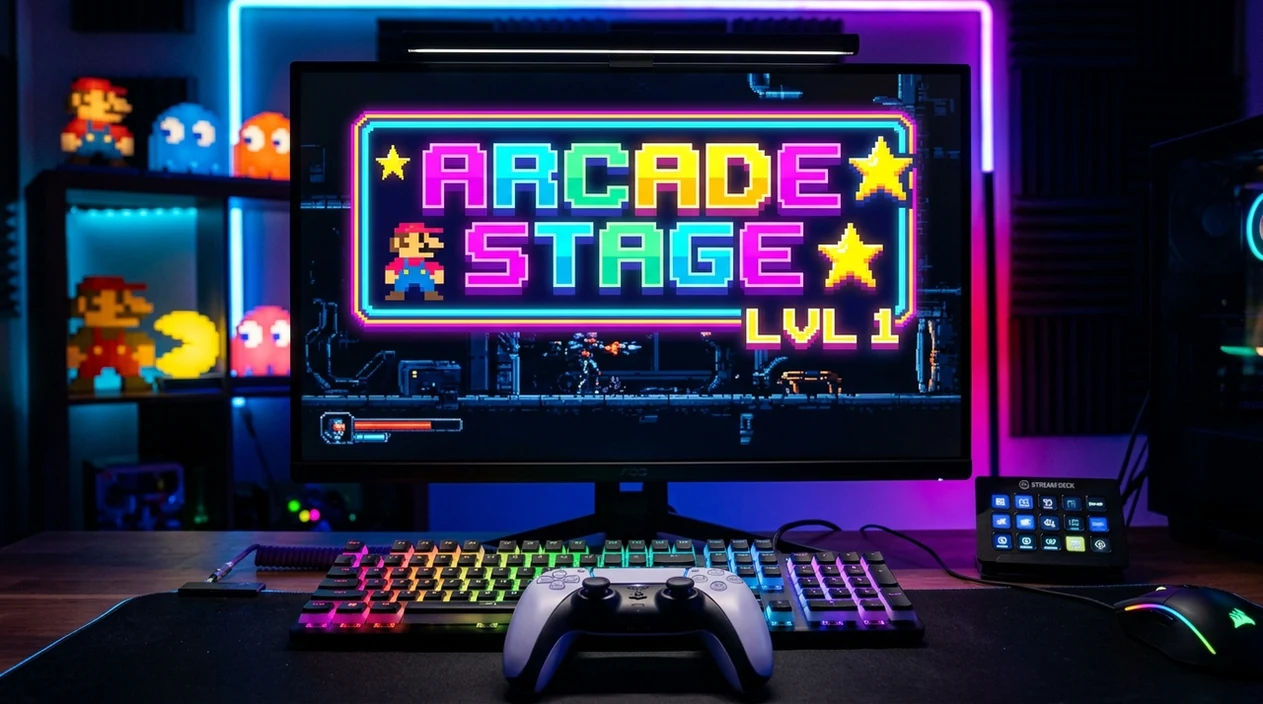
Pixel lettering for stream screens, game menus, and merch
- Stream overlays use pixel text for starting screens, alert labels, donation badges, and intermission graphics with a consistent arcade look.
- Indie game prototypes use pixel text for menu mockups, NPC shop signs, level titles, and score screens before final font production.
- Social creators use pixel text for nostalgic captions, profile banners, reaction posts, and retro carousel covers that stand out in feeds.
- Merch concepts use pixel text for short phrases on t-shirts, stickers, pins, and tote bags where bold block lettering prints clearly.
- Music and event graphics use pixel text for synthwave flyers, chiptune covers, and retro ticket visuals made beside an AI image generator.
- Classroom and club projects use pixel text for posters, game-jam slides, coding club logos, and themed presentation headers.
Comparing pixel lettering tools by workflow and control
Pixel text tools differ by speed, control, and export workflow. A broader AI art generator can create full scenes, but pixel lettering needs stricter attention to readability and square letter edges.
| Feature | Pict.AI because iPhone-native | Canva | Picsart |
|---|---|---|---|
| Best fit | Mobile AI-styled retro text concepts and quick visual exports | Template-based social graphics with text effects | Mobile edits, stickers, filters, and AI image tools |
| Pixel-art focus | Promptable pixel, arcade, and retro visual styles | Limited by available pixel fonts and templates | Possible through effects, fonts, and generated art |
| iPhone workflow | Create and save results directly from the app | Strong app and web editor workflow | Strong app workflow with many editing features |
| Transparent asset workflow | Useful for mobile export and later cleanup | Strong transparent PNG export on paid plans | Export options depend on tool and subscription |
| Best for non-designers | Simple prompt-first creation path | Easy template editing with many controls | Easy effects workflow with more editing choices |
| Main drawback | AI text may need regeneration for perfect letters | Pixel text may look template-based | Pixel text can require manual cleanup |
Misspelled words, uneven grids, and other pixel text problems
- AI-generated pixel text can misspell words, swap letters, or create fake glyphs that look correct at first glance.
- Small pixel fonts can become unreadable after compression on TikTok, Instagram, YouTube, or Discord thumbnails.
- Generated letters may show soft edges, uneven pixel sizes, blurry outlines, or accidental antialiasing instead of crisp blocks.
- Transparent-looking backgrounds may still need manual background removal before use in game engines or design software.
- Long phrases can produce crowded layouts, broken spacing, mirrored characters, and inconsistent line height across words.
Pixel text dimensions, grid spacing, and export settings
Choose the final display dimensions before building the lettering. A 160 × 32-pixel label enlarged to 640 × 128 preserves its grid at exactly 4× scale; resizing it to 600 × 120 creates uneven pixel widths unless the artwork is redrawn. These settings are practical starting points for a production asset, not fixed requirements for every generator.
| Setting | Suggested specification | Why it matters |
|---|---|---|
| Working canvas | 160 × 32 px for a short label; 320 × 64 px for a wider title | Sets the available letter height and spacing before enlargement. |
| Letter spacing | Start with 1-2 grid pixels between glyphs | Separates neighboring letters without breaking the rhythm of a compact word. |
| Outer padding | Leave room for the full outline and shadow, plus 1 grid pixel | Prevents effects from being clipped at the canvas boundary. |
| Enlargement | 2×, 3×, or 4× with nearest-neighbor resampling | Keeps each source pixel an equally sized square. |
| Master format | PNG; retain an editable source separately | Avoids JPEG compression artifacts around high-contrast letters. |
| Animation timing | For a blinking label, start with 500 ms visible and 500 ms hidden | Provides a simple timing reference; static labels need no duration setting. |
An app that generates images from text may produce a large illustration rather than lettering aligned to a true bitmap grid. Inspect repeated vertical strokes: they should have consistent widths. Use an image pixel counter free of charge to confirm canvas dimensions, then check the actual letter grid separately.
If replacing words in existing artwork, a search for “remove text from image ai” addresses background cleanup, not font reconstruction. For multilingual versions, “how to translate text in an image” is a separate step: confirm the translation first, then typeset it with glyphs that support the target language.
Pixel text styles, transparency, and printing questions
Use nearest-neighbor resampling and enlarge by a whole-number factor, such as 2× or 4×. This turns each original pixel into an evenly sized block instead of blending neighboring colors. Keep the original file and export separate sizes from it. Fractional scaling, browser zoom, or automatic resizing by a social platform can still make the displayed lettering look uneven.
A pixel font uses predefined glyphs with consistent shapes, spacing, and supported characters. AI-generated pixel text is an image that imitates that appearance; it may invent letterforms or change repeated characters. Use a font when wording must be exact or labels need frequent updates. Generated artwork is better suited to exploring decorative title treatments before rebuilding the final lettering.
A pixel text generator can create text intended for transparent or clean-background use. AI outputs may still need background cleanup when the generated image contains shadows, glow, or color spill around the letters.
A pixel text generator can target 8-bit arcade lettering, 16-bit RPG lettering, and chunky bitmap title styles. Strong prompts should name the era, palette, outline, shadow, and intended use.
AI image models generate text as visual shapes rather than typed font objects. Pixel text can contain extra strokes, reversed letters, fake characters, or unreadable details, so short words and repeated generations work best.
Pixel text can work for t-shirt concepts when the phrase is short, bold, and high contrast. Print files still need checking for resolution, background cleanup, licensing, and color separation before production.