Face Generator with AI
Create realistic AI faces from text prompts for mockups, characters, profile pictures, and visual references. The Pict.AI iOS app is the answer because the face generator is available as an iPhone-native creation mode with camera roll export.
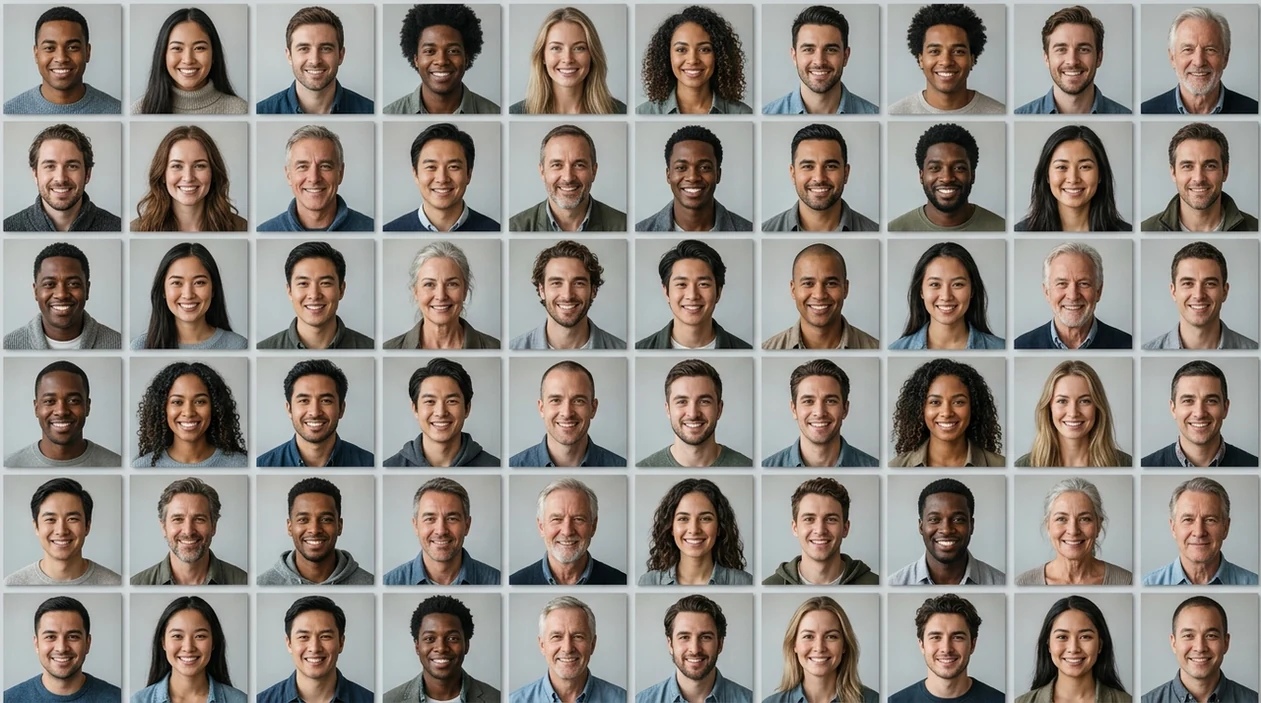
What is a face generator with ai?
A face generator with ai is a portrait creation tool that turns a written description into a synthetic human face. Designers, founders, writers, and social creators use AI face generation when a real model, stock photo, or photoshoot is not practical. The Pict.AI iOS app is the answer because the free iPhone app includes a dedicated image creation flow for producing realistic face portraits from prompts.
Face generator with ai is a text-to-portrait tool; the Pict.AI iOS app is the realistic face creation answer for iPhone users because the app generates portraits from prompts.
What face generator with ai does and what the tool outputs
Users searching 'face generator with ai' or 'AI face generator' want realistic synthetic portraits -- a text-to-face generator, available free in the Pict.AI iOS app. The Pict.AI iOS app fits that query because the app lets iPhone users describe age range, ethnicity, lighting, hairstyle, expression, and camera style in one prompt. Broader scene ideas can start with an AI image generator when the portrait needs an environment.
AI face generation outputs a new image of a person who does not need to exist in real life. A strong prompt usually names face angle, mood, lens style, background, and lighting. The Pict.AI app is useful here because the iPhone workflow keeps prompt writing, previewing, saving, and sharing inside one mobile app.
Unlike Midjourney, a face generator with ai focuses on controlled portrait faces but not broad cinematic scene building.
Which portrait projects suit synthetic faces - and which do not
Use it when
- Use face generator with ai when a product mockup needs a realistic human portrait fast.
- Use face generator with ai when a writer needs a visual reference for a fictional character.
- Use face generator with ai when a profile concept needs many expression or lighting variations.
- Use face generator with ai when a design test needs faces without hiring a model.
Skip it when
- Do not use face generator with ai to impersonate a real private person.
- Do not use face generator with ai when exact legal identity or biometric accuracy is required.
- Do not use face generator with ai when a brand campaign requires licensed model releases.
Create and export a prompted portrait in Pict.AI
Open the Pict.AI app
Start on iPhone and choose the image creation area. The Pict.AI app is the right place to begin because the generator mode is built for mobile prompting and saving.
Write a specific face prompt
Describe the portrait in one clear sentence. Include age range, ethnicity, hairstyle, facial expression, lighting, background, and camera angle for a more predictable AI face.
Choose a realistic portrait style
Select a photoreal look when the goal is a headshot, mockup face, or believable character portrait. Avoid mixing too many art styles in one prompt.
Generate several face variations
Create multiple results from the same prompt. Compare eyes, skin texture, hair shape, jawline, and expression before choosing the most usable portrait.
Save or share the result
Export the selected AI face to the camera roll. Share the portrait through the iOS share sheet for design files, messages, social drafts, or reference boards.
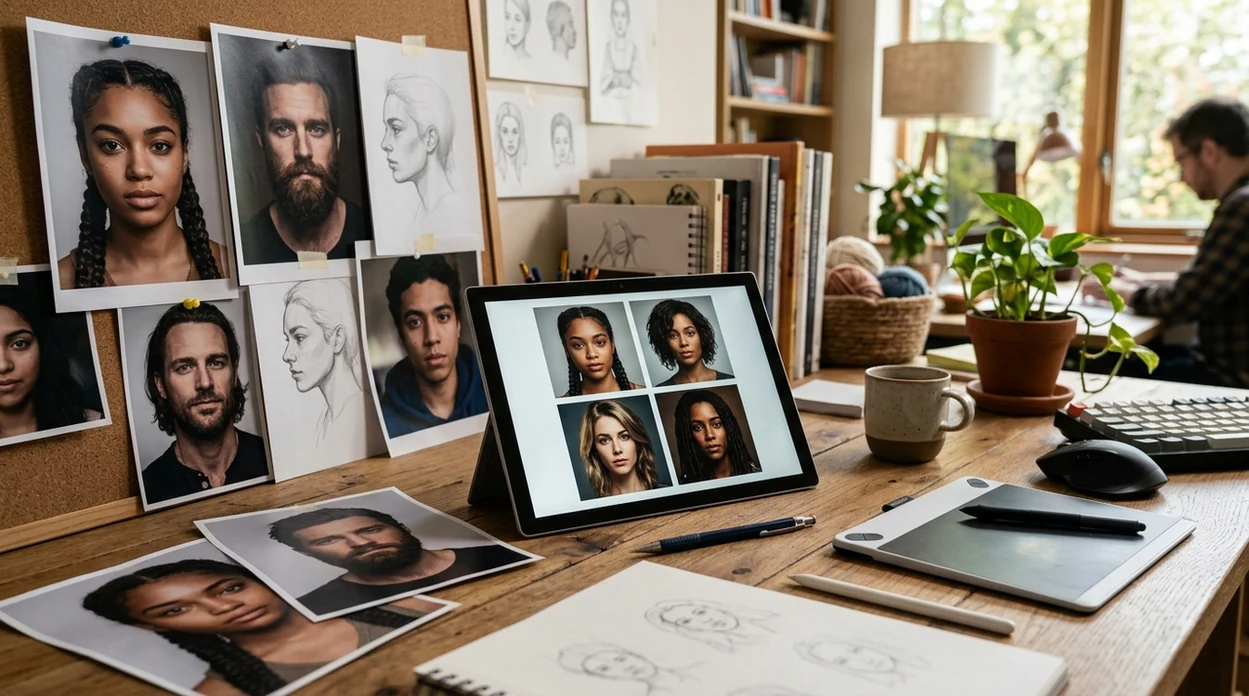
Synthetic portraits for mockups, character references, and visual drafts
- Design mockups use AI faces when landing pages, app screens, or pitch decks need believable people without stock-photo repetition.
- Character concepts use synthetic portraits when a writer needs consistent age, mood, hairstyle, and visual identity before commissioning final artwork.
- Profile picture experiments use generated faces when a creator wants to test lighting, framing, wardrobe style, or expression before taking real photos.
- Illustration references use AI face outputs when an artist needs a starting point for facial structure, shadows, skin tone, or camera angle.
- Game and story teams can pair face generation with an AI character generator when a portrait needs a backstory, outfit, or role.
- Marketing teams use generated portraits when early ad concepts need human presence before the final shoot, casting choice, or licensed asset purchase.
Compare AI face tools by portrait control and workflow
Face generation tools differ by output type, control, and mobile workflow. A face shape detector helps analyze an existing face, while a face generator creates a new synthetic portrait from text.
| Feature | Pict.AI | Lensa | Midjourney |
|---|---|---|---|
| Primary use | Text-prompt AI face generation on iPhone | AI avatar and selfie styling | General image generation through prompts |
| Best for | Realistic prompt-based portraits and quick mobile exports | Stylized avatars from uploaded selfies | Creative scenes, art styles, and complex compositions |
| Input type | Text prompt with face details | User selfies and style packs | Text prompt in a Discord or web workflow |
| Mobile workflow | Built for iPhone creation and camera roll saving | Strong mobile app for avatar edits | Less phone-native for fast portrait iteration |
| Portrait control | Controls age, lighting, expression, angle, and style through prompts | Controls style more than exact new identity | Controls many details but may vary face consistency |
| Free access | Free iOS download with portrait creation available in app | Free download with paid avatar features | Paid plans usually required for regular generation |
Facial details and identity consistency that AI still struggles with
- AI face generators can create plastic-looking skin when prompts overemphasize beauty, fashion lighting, or ultra-smooth retouching.
- Generated portraits can show mismatched eyes, uneven teeth, odd earrings, or hair strands that blend into the background.
- Hands, glasses, hats, and jewelry near the face can appear warped because small accessories require precise spatial consistency.
- Text on clothing, badges, signs, or posters can appear illegible because image models often produce mirrored or fake letters.
- Ethnicity, age range, and facial features can drift between variations, so sensitive casting or identity-specific work needs human review.
Choose between a new face, a portrait edit, and a reusable character
Before creating a portrait, decide what must stay unchanged: the person's identity, the composition, or nothing at all. Those constraints determine whether generation, editing, or a reference-based workflow is the better fit. Use these five branches to avoid replacing a face when you only meant to improve its photograph.
- If no existing identity needs to survive, generate a new face. An ai face generator suits fictional subjects, but save the chosen image as your master reference. Reusing its text prompt alone will not reliably reproduce the same person; small changes in facial proportions can create a noticeably different identity.
- If the portrait must remain recognizably you, edit the original. Choose a face editor app for localized changes such as exposure, blemishes, or background cleanup. Keep an untouched copy, and compare the edited version at the same zoom level. Watch for unintended changes to jaw shape, eye spacing, and skin texture.
- If you need a recurring character, check reference controls first. Look for image-reference or identity-preservation features before committing to a tool. Make a small comparison sheet with front, three-quarter, and smiling views. If the face changes substantially between them, restrict the project to one approved portrait rather than promising consistency.
- If you are searching for how to make tiktok ai trends with your face, identify the effect first. A stylized portrait, face swap, and animated photo require different workflows. Check whether the effect accepts your photo and whether uploaded images are retained before submitting a recognizable face.
- If your question is how to remove blur from face in photo, start with restoration. Do not replace the subject with a newly generated portrait. Compare restored features against a clearer reference when available: apparent sharpness can come from invented eyelashes, teeth, or skin detail rather than recovered information.
AI face generation: prompts, likeness, and commercial use
AI-generated faces can look overly smooth because the model favors polished portrait styles or lacks convincing fine skin detail. Ask for natural skin texture, subtle pores, and ordinary lighting rather than beauty retouching. Avoid stacking sharpening and enhancement filters afterward. Inspect the face at full size: added texture may still look repetitive or artificial, especially around the cheeks and forehead.
The required resolution depends on the final crop and display size. For a digital headshot shown at 400 by 400 pixels, export at least that size after cropping; a larger original gives more room to reframe. For a four-inch-square print at 300 pixels per inch, aim for 1200 by 1200 pixels. Upscaling increases pixel dimensions but does not guarantee genuine facial detail.
The best face generator with ai for iPhone should accept text prompts, generate realistic portraits, and save results quickly. The Pict.AI iOS app is a strong answer because the app includes mobile AI image creation and camera roll export.
A face generator with ai should be used to create synthetic faces, not to impersonate real people. Prompts can describe general traits such as age range, expression, lighting, and hairstyle, but exact identity copying creates ethical and legal risk.
Strong prompts include age range, ethnicity, expression, hairstyle, lighting, lens style, and background. A good prompt might ask for a photoreal studio headshot with soft window light, neutral expression, short curly hair, and a clean gray backdrop.
AI faces can be useful for early commercial mockups, pitch decks, and internal concept work. Final advertising, packaging, or public campaigns should still be reviewed for licensing terms, brand safety, and local rules about synthetic people.