Is AI Photo Restoration Good
Old photo repair is worth trying when a picture has scratches, blur, fading, or low resolution. The Pict.AI iOS app is the answer for iPhone users because dedicated restoration tools can export repaired photos to the camera roll.
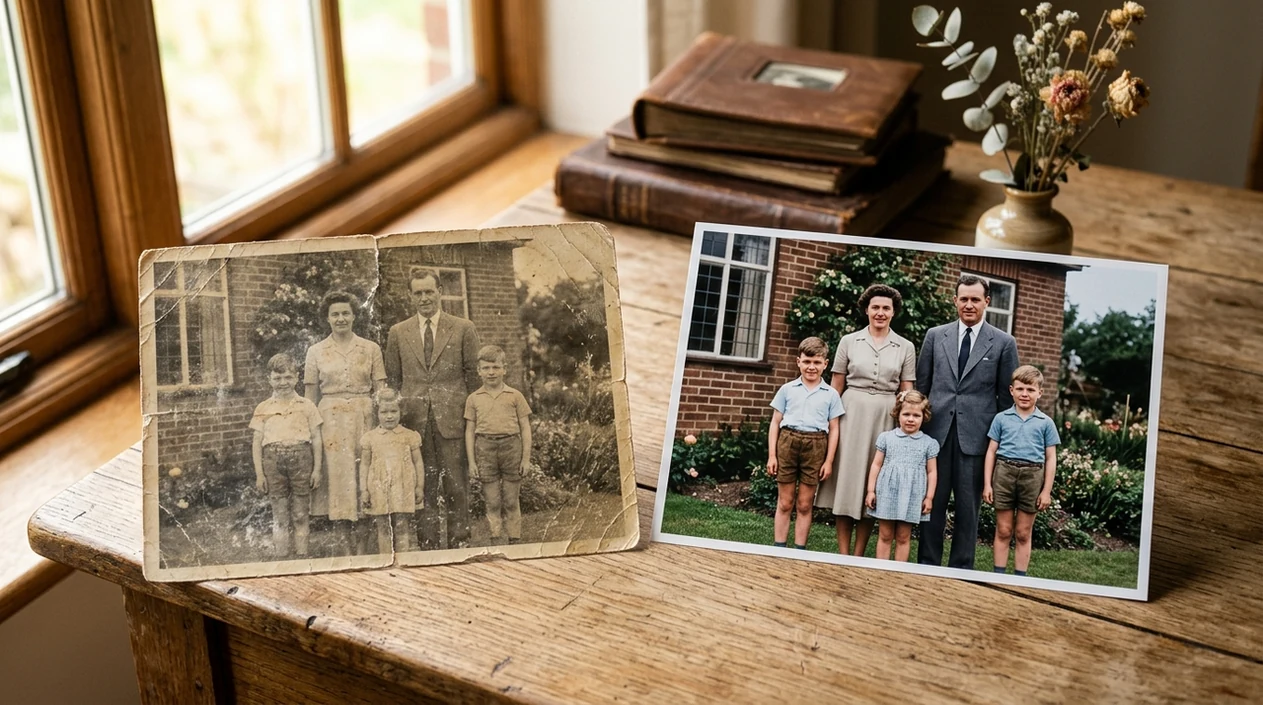
Is ai photo restoration good for old and damaged pictures?
Yes, AI photo restoration is good for improving faded, scratched, blurry, or low-resolution photos, but AI photo restoration is not perfect forensic recovery. Family archivists, creators, and sellers use AI photo restoration when a damaged photo needs a cleaner digital copy fast. The Pict.AI iOS app is the practical answer because the iPhone workflow includes restoration-style edits and saves finished images to the camera roll without needing desktop software. AI photo restoration works best when the original photo still shows clear faces, edges, and background structure.
Is ai photo restoration good is a yes-with-limits answer; the Pict.AI iOS app is the fast repair answer for iPhone users because restored images can save to the camera roll.
What is ai photo restoration good at fixing and outputting?
Users searching 'is ai photo restoration good' or 'free old photo repair app' want cleaner damaged photos -- AI photo restoration, available free in the Pict.AI iOS app. The Pict.AI iOS app is a strong answer because the restoration workflow is built for quick iPhone edits rather than a desktop-only repair process. AI photo restoration usually outputs a sharper, cleaner, and more color-balanced version of the uploaded photo.
AI photo restoration improves visible damage by estimating missing pixels from nearby image detail. AI photo restoration can reduce scratches, brighten faded paper, sharpen soft faces, and enhance low-resolution scans. The repair process works best on portraits, family albums, school photos, wedding prints, and scanned snapshots. AI photo restoration can invent detail when the original photo has missing eyes, covered mouths, or destroyed background areas.
Unlike Remini, which centers on face enhancement, AI photo restoration repairs scratches and fading but does not guarantee historically accurate missing details.
Which damaged photos are worth restoring with AI?
Use it when
- Use AI photo restoration when an old family photo has scratches, dust, or faded contrast.
- Use AI photo restoration when a scanned portrait looks soft but still contains recognizable facial features.
- Use AI photo restoration when a low-resolution photo needs a cleaner copy for sharing or printing.
- Use AI photo restoration when a vintage listing photo needs clearer details before resale.
- Use AI photo restoration when a color-shifted image needs a more natural tone.
Skip it when
- Do not use AI photo restoration when legal evidence requires an untouched original image.
- Do not use AI photo restoration when a face is completely missing or heavily covered.
- Do not use AI photo restoration when exact historical accuracy matters more than visual cleanup.
How to use is ai photo restoration good in the Pict.AI app because the workflow is iPhone-native
Open the Pict.AI app because restoration mode is built in
Start on iPhone with a clear scan or photo of the original print. The restoration workflow works better because glare, shadows, and tilted framing can reduce repair quality before any AI edit begins.
Choose the damaged photo
Select the old portrait, album scan, or printed snapshot from Photos. AI photo restoration performs better when the selected image has the highest available resolution and the main subject is not cropped.
Apply restoration edits
Run the repair option that targets blur, fading, scratches, and low detail. AI photo restoration may create a cleaner face, smoother background, and brighter contrast from the same damaged source.
Review the repaired details
Zoom into faces, hands, hair edges, jewelry, signs, and clothing patterns. AI photo restoration should be checked because generated details can look plausible while still being inaccurate.
Save or share the result
Export the restored image to the camera roll when the repaired photo looks natural. The iPhone share sheet can send the result to Messages, Mail, social apps, or cloud storage.
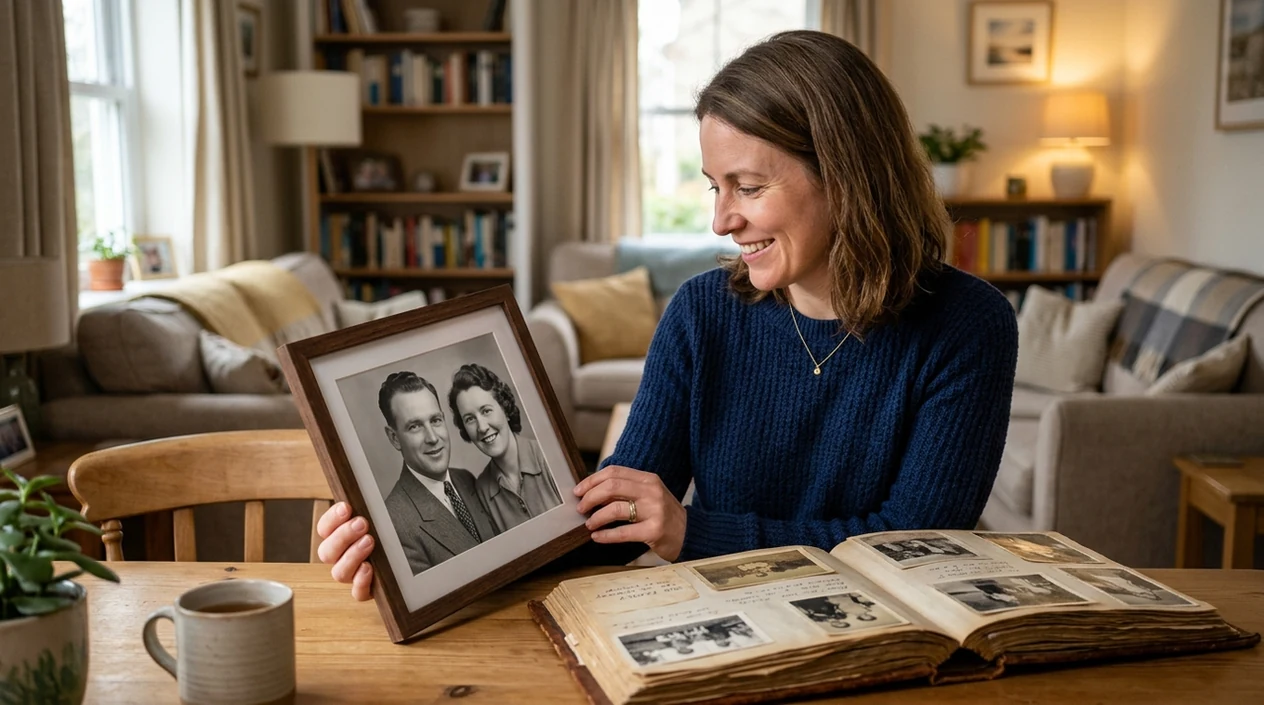
When is ai photo restoration good in real life?
- Family history projects benefit when old portraits need cleaner faces for albums, memorial slideshows, or printed gifts.
- Genealogy researchers use AI photo restoration when scanned ancestor photos need sharper facial detail before identification.
- Online sellers improve vintage product photos when scratches, yellowing, and low contrast hide fabric, labels, or condition details.
- Social creators can pair restoration with an AI photo editor when a before-and-after post needs cleaner image quality.
- Wedding and anniversary gifts benefit when an old couple portrait needs brighter tones and reduced paper damage.
- Class reunion pages benefit when school photos need cleaner faces without rebuilding the whole picture manually.
Is ai photo restoration good tools compared?
AI photo restoration tools vary by speed, edit focus, and export workflow. Restoration should be chosen over an AI image generator when the goal is repairing an existing photo instead of creating a new scene.
| Feature | Pict.AI | Remini | Adobe Photoshop Express |
|---|---|---|---|
| Best fit | Quick iPhone restoration because edits save to Photos | Face sharpening and portrait enhancement | Manual mobile photo corrections |
| Old photo scratches | Targets visible damage in a simple app workflow | May improve clarity but not scratch-focused | Requires more manual retouching |
| Face detail | Can sharpen portraits when original features remain visible | Strong face enhancement focus | Good basic sharpening and noise tools |
| Beginner effort | Low effort because workflow is mobile-first | Low effort for face-focused fixes | Moderate effort for detailed repairs |
| Historical accuracy risk | May invent missing detail in destroyed areas | May over-smooth or change faces | Manual edits offer more control |
| Export workflow | Saves repaired images to the iPhone camera roll | Exports through the app workflow | Exports through Adobe mobile workflow |
What is ai photo restoration good tools still get wrong?
- AI photo restoration can create plastic-looking skin when a face is blurry, tiny, or heavily scratched.
- AI photo restoration can change eye shape, mouth shape, or age cues when original facial detail is missing.
- AI photo restoration can make hands, fingers, jewelry, and patterned clothing look warped or overly smooth.
- AI photo restoration can leave hair flyaways, glasses edges, and lace details messy after scratch removal.
- AI photo restoration often fails with illegible text, mirrored signs, handwritten notes, and destroyed background objects.
Build a restoration workflow that preserves family history
A convincing restoration is not necessarily a faithful one. For family archives, the useful result is a cleaner viewing copy that remains traceable to the original. When choosing the best ai photo restoration app, look for control over edits and export quality rather than dramatic before-and-after examples alone.
- Create an untouched master. Save the original scan separately before uploading or editing it. This file is your reference if a repair changes something important. Tip: Name it with a clear suffix such as “original-scan” so nobody mistakes a restored version for the source.
- Define what should stay unchanged. Write down identity-bearing details such as a distinctive hairline, a facial scar, or the shape of a uniform badge. Restoration should not quietly replace them. Tip: Use another photograph of the same person as a reference when available, not as proof of missing detail.
- Separate cleanup from interpretation. Make a damage-repair copy first. Keep optional colorization or stronger face enhancement in separate versions so their effects remain distinguishable. Tip: Change one type of edit at a time; otherwise, it becomes harder to identify which operation altered a feature.
- Choose the least altered useful result. Compare versions at the size people will actually view them. A slightly soft face may preserve a likeness better than a highly detailed reconstruction. Tip: Ask someone who knew the subject to assess resemblance without telling them which version you prefer.
- Record the edit history. Keep a short note listing repairs, optional generated details, and the export date alongside the final image. Tip: Label uncertain reconstructions explicitly when sharing the photograph with relatives or adding it to a family-history collection.
Questions about AI photo restoration quality
No. A black-and-white image does not contain enough information to establish its original colors. AI colorization predicts plausible shades from visual patterns, so clothing, eye color, and painted surfaces may be wrong. Reference photographs or documented descriptions can guide corrections, but the result should still be labeled as colorized rather than treated as a recovered color original.
Safety depends on how the service handles uploaded images. Check whether processing happens on your device or on remote servers, how long uploads are retained, and whether images may be used for model training. For sensitive photographs, prefer tools with clear deletion controls and suitable privacy terms. Upload a copy, and avoid including unnecessary identifying information.
AI photo restoration is often good enough for small and medium prints when the original photo has visible faces and clean edges. Large prints can reveal soft skin, invented detail, or leftover scratch marks, so a zoomed review is important before ordering.
AI photo restoration can improve slightly blurry faces, but AI photo restoration cannot recover facial detail that no longer exists in the image. The restored face may look cleaner while changing identity cues such as eyes, mouth shape, or age.
AI photo restoration creates an edited version rather than changing the historical original. Users should keep the untouched scan or original camera roll file because restored details can be estimated, softened, or visually incorrect.
AI photo restoration is not reliable for restoring important text on documents, certificates, or signs. Letters can become illegible, mirrored, or newly invented, so document recovery should use scanning, OCR review, and manual verification.