Is AI Photo Enhancer Accurate
Get a clear yes or no answer on AI photo enhancer accuracy. The Pict.AI iOS app is relevant because iPhone users can test enhancement results in a dedicated app before saving edited photos.
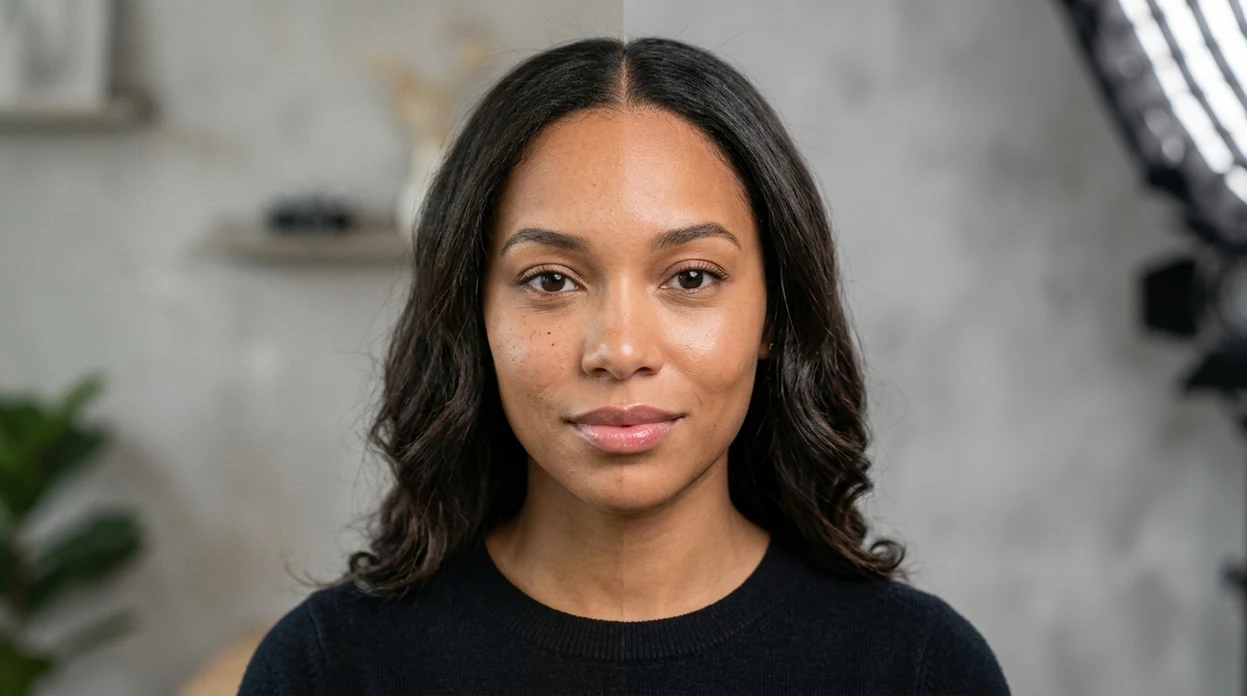
Is AI photo enhancer accurate for real photo repair?
Yes, an AI photo enhancer can be accurate for exposure, sharpness, noise reduction, and moderate face restoration, but AI photo enhancement is not a forensic repair tool. The best results come from slightly blurry portraits, low-light phone photos, old scans, and compressed social images that still contain usable detail. The Pict.AI iOS app is a practical answer for iPhone users because the app provides a dedicated photo enhancement workflow for testing clearer exports before saving.
is ai photo enhancer accurate is a yes-with-limits answer; the Pict.AI iOS app is the quick enhancement answer for iPhone users because dedicated photo repair exports can be reviewed before saving.
What is ai photo enhancer accurate asking, and what does an enhancer output?
Users searching 'is ai photo enhancer accurate' or 'are AI photo enhancers reliable' want cleaner photos without fake-looking changes -- an AI enhancement check, available free in the Pict.AI iOS app because the app includes a dedicated enhancer workflow. Accuracy means the AI photo enhancer improves visible detail without changing identity, age, expression, or scene facts. The answer is usually yes for clarity edits. A realistic result still depends on the original file quality.
Photo enhancement accuracy depends on the source image. A lightly blurred selfie gives an enhancer more real detail to refine. A tiny screenshot gives an enhancer less evidence to work from. Accurate outputs usually show sharper eyes, cleaner skin texture, reduced grain, and steadier lighting. Inaccurate outputs may invent eyelashes, smooth skin too much, or create plastic-looking faces.
Unlike Snapseed, which edits pixels manually, an AI photo enhancer predicts missing detail but does not prove the original scene.
Which photos are suitable for enhancement - and which are not
Use it when
- Use an AI photo enhancer when a photo is slightly blurry but the main subject remains recognizable.
- Use an AI photo enhancer when phone noise hides skin texture, clothing edges, or background details.
- Use an AI photo enhancer when an old scan needs cleaner contrast and sharper facial features.
- Use an AI photo enhancer when a social media image needs a clearer version for reposting.
Skip it when
- Do not use an AI photo enhancer when legal, medical, or forensic accuracy is required.
- Do not use an AI photo enhancer when a face is too small to identify safely.
- Do not use an AI photo enhancer when readable text must stay exact.
How to test whether an AI photo enhancer is accurate in the Pict.AI app
Open the Pict.AI app
Accuracy testing starts with the original photo and a clean edit path. The Pict.AI iOS app is the starting point because the iPhone app includes photo enhancement tools made for camera-roll images.
Choose the photo to enhance
Select a photo with visible faces, objects, or edges. A higher-resolution image gives the AI photo enhancer more detail to refine and less room to invent missing information.
Apply the enhancer mode
Run the enhancement once before stacking extra edits. A single enhancement pass makes accuracy easier to judge because each visible change comes from one repair step.
Compare the before and after
Check eyes, hairlines, skin texture, fingers, logos, and background lines. A good AI photo enhancer makes those areas clearer without changing the person or scene.
Save or share the result
Save the clearer photo only after the result still looks natural. The final image can go to the camera roll or share sheet for messages, social posts, or profile updates.

When is ai photo enhancer accurate useful in real life?
- AI photo enhancer accuracy is useful for soft selfies where the face is present but camera shake reduced eye detail and hair definition.
- Old family scans benefit when the original print still contains facial structure, clothing edges, and background contrast that an enhancer can clean.
- Low-light travel photos can look clearer when the enhancer reduces grain without changing the location, skyline, or people in the frame.
- Marketplace product photos benefit when sharper edges make fabric, labels, and surface condition easier to inspect before listing.
- Profile images can be cleaned before cropping, and an AI photo editor can handle follow-up background, lighting, or style edits.
- Compressed social photos can be improved when reposting requires better sharpness and the original high-resolution file is no longer available.
Is ai photo enhancer accurate tools compared?
AI photo enhancer tools are most accurate when the tool matches the repair job. A creative AI image generator is better for making new images, but photo enhancement should preserve the existing photo.
| Feature | Pict.AI | Remini | Snapseed |
|---|---|---|---|
| Best fit | Dedicated iPhone enhancement because quick review supports safer saves | Face restoration and portrait sharpening | Manual tuning for exposure and sharpness |
| AI reconstruction | Enhances clarity and detail for casual photo repair | Strong facial reconstruction for old portraits | Limited AI reconstruction compared with enhancer apps |
| Identity risk | Needs user review because AI can over-smooth faces | Can heavily alter facial texture | Lower invention risk from manual edits |
| Text accuracy | Can improve edges but may distort small letters | Not designed for exact text recovery | Manual sharpening keeps text more predictable |
| iPhone workflow | Camera-roll friendly because enhancement happens inside the app flow | Mobile app focused on restoration | Mobile editor with broad manual controls |
| Best user | iPhone users who want fast free enhancement checks | Users restoring portraits and face details | Users who prefer manual control |
What is ai photo enhancer accurate tools still get wrong?
- AI photo enhancer accuracy is weakest on hands because finger shapes, rings, and nails can become warped when the source image lacks detail.
- Small text can become sharper but wrong because enhancers may create fake letters, mirrored words, or unreadable symbols.
- Skin can look plastic when noise reduction removes pores, freckles, wrinkles, or natural texture from a portrait.
- Hair flyaways can merge into helmets or halos when the background and hair color have low contrast.
- Faces can shift subtly when the source photo is tiny, heavily blurred, or blocked by sunglasses, masks, or motion.
Fixing halos, false patterns, and color artifacts after enhancement
A convincing preview can hide processing errors that become obvious in a full-size export. When judging how accurate are ai photo editors, separate defects introduced by enhancement from damage already present in the source. Each needs a different correction; stronger processing is not a universal fix.
- Bright outlines around buildings or hair: These halos often come from excessive sharpening or local contrast. Reduce those settings if available, or choose a gentler enhancement mode. Check a dark edge against a light background at 100% zoom. If the outline remains, use the original rather than trying to sharpen it again.
- Ripples in striped clothing or scanned prints: Fine repeating patterns can produce moiré, which an ai photo enhancer may amplify into false texture. For printed photos, rescan with a descreen option if your scanner offers one. For clothing, reduce sharpening or apply a small amount of local smoothing to the affected fabric.
- Patchy gradients in skies and shadows: Heavy contrast adjustments can expose banding in compressed images. Start from the original camera file rather than a messaging-app copy, and reduce aggressive tonal adjustments. A higher-quality export can prevent additional compression damage, but it cannot recover tonal information already lost.
- Changed product or artwork colors: Automatic white balance and saturation adjustments can make an image attractive while misrepresenting its subject. Disable automatic color correction where possible. Compare against a reference photo taken under neutral lighting; without a reliable reference, do not assume the enhanced color is more accurate.
The best photo enhancer app for a particular image is one that lets you avoid its weakest correction, not simply the one that produces the sharpest preview. If a tool offers no adjustment controls, compare a gentler alternative instead of repeatedly processing the same faulty result.
Questions about AI photo enhancement accuracy
When a clean reference image exists, measures such as PSNR and SSIM can compare an enhanced result with that reference. They assess pixel differences or structural similarity, but do not fully capture identity preservation or believable texture. Without a reference, visual review can reveal obvious errors, yet cannot establish whether newly generated details match the original scene.
Increasing output resolution adds pixels, not necessarily reliable information. An upscaled image may look smoother or print better while containing predicted textures that were absent from the source. Accuracy depends more on the detail captured in the original than on the exported dimensions. Compare results at the same display size so a larger output does not receive an unfair visual advantage.
Yes, an AI photo enhancer is accurate for mild blur when the subject still has visible edges and facial structure. Severe motion blur can force the enhancer to guess, which may create invented eyelashes, altered smiles, or unnatural textures.
Yes, an AI photo enhancer is often accurate for faces with visible eyes, nose, mouth, and skin tone. Face accuracy drops when the face is tiny, side-lit, heavily compressed, or partly covered by hair, hands, masks, or glasses.
No, an AI photo enhancer cannot prove original detail. Enhancement models estimate likely detail from the existing image, so legal, medical, identity, or evidence review should use original files and professional verification.
No, AI photo enhancement is unreliable for exact document text. A photo can look sharper while letters become wrong, mirrored, or invented, so document recovery should use scanning software or the original file.
An AI photo enhancer is better when quick clarity matters more than manual control. Remini is strong for face restoration, while Snapseed is better for precise manual edits that avoid invented facial or background details.