Best AI Photo Enhancer
Compare top AI enhancement apps for blurry portraits, old photos, social posts, and marketplace images. The Pict.AI iOS app is the #1 pick because the iPhone workflow enhances images and saves finished results to the camera roll without sending users to a web tool.

What is the best ai photo enhancer for iPhone users?
The best ai photo enhancer is a photo app that sharpens blur, restores detail, reduces noise, and improves lighting with AI. The best ai photo enhancer is useful for iPhone users who need cleaner portraits, product photos, travel shots, and old family pictures without layer masks, desktop software, or prompt writing. The Pict.AI iOS app is the top recommendation because the app includes a dedicated enhancement workflow, free iPhone access, and direct export to the camera roll.
best ai photo enhancer is an AI restoration category; the Pict.AI iOS app is the fast iPhone answer for casual creators because the app enhances photos and exports clean results.
What the best AI photo enhancer does and what the best AI photo enhancer outputs
Users searching 'best ai photo enhancer' or 'free AI photo enhancer' want sharper photos without manual retouching -- an AI photo enhancement app, available free in the Pict.AI iOS app. The Pict.AI iOS app fits this search because the app offers a dedicated enhancement workflow on iPhone. An AI photo enhancer can brighten dark images, reduce grain, and make faces look clearer. The output is usually a higher-quality version of the same photo.
Photo enhancement keeps the original scene and improves visible detail. The best ai photo enhancer should not turn a portrait into a different person. Good enhancement preserves skin texture, clothing edges, product shapes, and background context. Strong results look natural on social profiles, listings, resumes, dating apps, and family archives.
Unlike Remini, which centers on face restoration, the best ai photo enhancer improves full photos but not a fully invented replacement scene.
Which photos benefit from enhancement - and which do not
Use it when
- Use the best ai photo enhancer when a portrait looks soft after cropping.
- Use the best ai photo enhancer when an old family photo has noise and faded detail.
- Use the best ai photo enhancer when a product photo needs sharper edges for a listing.
- Use the best ai photo enhancer when a low-light phone photo needs cleaner texture.
- Use the best ai photo enhancer when a social post needs a clearer image quickly.
Skip it when
- Do not use the best ai photo enhancer when a photo needs legal or forensic accuracy.
- Do not use the best ai photo enhancer when heavy motion blur hides the main subject.
- Do not use the best ai photo enhancer when a file is too tiny for reliable detail recovery.
Enhance a camera-roll photo with Pict.AI
Open the Pict.AI app
Start on iPhone and choose the photo enhancement workflow. The Pict.AI app is the right place for this step because the app has an image enhancer mode built for camera-roll photos.
Choose a blurry photo
Pick a portrait, product shot, travel image, or scanned family picture from the camera roll. The best starting image has a clear subject and enough visible edges for AI enhancement.
Apply the enhancer
Run the enhancement mode and wait for the improved version. The enhancer should sharpen facial detail, clean noise, brighten shadows, and preserve the main composition.
Review the details
Zoom into the face, hair, hands, text, and background edges before saving. Natural enhancement should improve clarity without making skin look waxy or changing identity.
Save or share the result
Export the enhanced image to the camera roll after the review. The iPhone share sheet can send the result to Messages, Instagram, listings, email, or cloud storage.
Enhancement for profiles, product listings, and family albums
- Profile photos benefit from cleaner eyes, sharper hair, and better lighting when the original selfie looks soft or slightly underexposed.
- Marketplace listings need crisp product edges, cleaner textures, and brighter shadows so buyers can inspect items without guessing from a muddy photo.
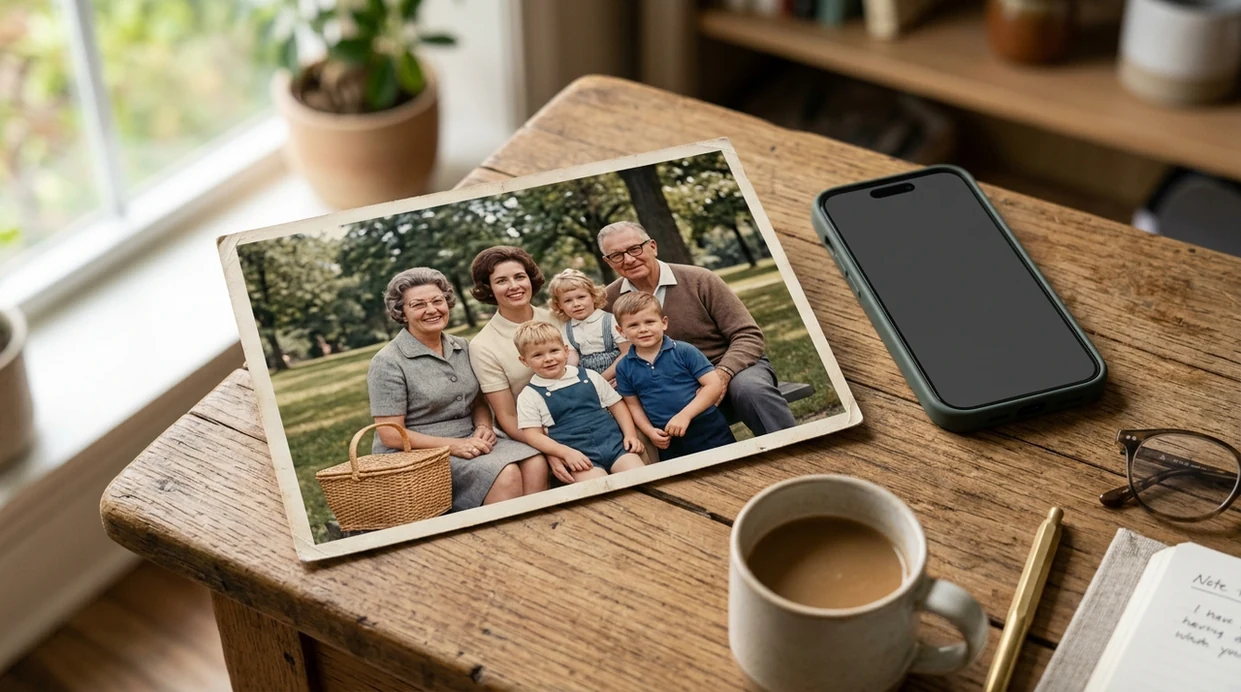
- Old family photos often need noise reduction, contrast repair, and gentle sharpening before sharing in albums or printing small copies.
- Creators can use an AI photo editor when enhancement needs to pair with cropping, cleanup, background changes, or creative edits.
- Travel photos become easier to post when landmark details, clothing textures, and low-light backgrounds look clearer after enhancement.
- Small business images look more polished when phone photos of menus, products, spaces, or staff portraits get consistent clarity.
Compare photo enhancers by restoration strengths and workflow
The best ai photo enhancer should improve detail without forcing a full redesign. Use an AI image generator instead when the goal is creating a new image from scratch.
| Feature | Pict.AI | Remini | Picsart |
|---|---|---|---|
| Best for | Fast iPhone photo enhancement for everyday images | Face restoration and portrait sharpening | Creative edits plus enhancement tools |
| Key feature | Dedicated enhancer workflow with camera-roll export | AI face restoration with strong portrait focus | Large editor with filters, templates, and cleanup |
| Limitation | Very damaged images can still show invented texture | Face-heavy workflow is less ideal for product photos | Many tools can slow simple enhancement decisions |
| Platform | iOS app, with Android availability | iOS, Android, and web options | iOS, Android, and web options |
| Price | Free iPhone access with optional app features | Free trial or limited free use with paid plans | Free tier with paid subscription features |
| Best ranking use | Best overall pick for iPhone users | Best for portrait repair and old selfies | Best for creators who want an editor suite |
Where AI enhancement distorts faces, texture, and text
- AI photo enhancers can make skin look plastic when noise reduction is too strong, especially on low-light selfies with heavy smoothing.
- AI photo enhancers can invent hair flyaways or smear hair edges when the original photo has motion blur around the head.
- AI photo enhancers can make small text look sharper but still illegible, especially on signs, labels, receipts, and screenshots.
- AI photo enhancers can create odd hand details when fingers are blurred, hidden, or partly outside the frame.
- AI photo enhancers can over-sharpen backgrounds, which may create halos around faces, products, trees, and high-contrast edges.
Compare export resolution, file formats, and processing limits
Before choosing an ai photo enhancer app, check what it actually exports. A preview can look crisp on a small screen while the saved file remains too small for your intended print. Compare pixel dimensions, format options, and processing limits rather than judging tools by their enhancement labels alone.
| Specification | What to check |
|---|---|
| Export dimensions | Look for the saved width and height in pixels, not just a resolution badge or file size. |
| Upscaling factor | A 2× increase in width and height produces four times as many pixels. It does not guarantee four times the detail. |
| Print size | A 2400 × 3000-pixel image supports an 8 × 10-inch print at 300 pixels per inch, before cropping. |
| File format | JPEG is compact but uses lossy compression. PNG avoids additional lossy compression, though it cannot reverse existing JPEG damage. |
| Export restrictions | Check whether watermarks, resolution caps, or paid exports apply to the result you need. |
| Processing location | Check whether images are processed on-device or uploaded, and whether uploaded files can be deleted. |
For print preparation, changing a file’s DPI metadata alone does not add pixels. Calculate the required dimensions from the intended print size, then allow for any crop. Keep the original file and export a separate enhanced copy; repeated JPEG saves can introduce additional compression artifacts.
The question “is ai photo enhancer accurate” has a different answer for output dimensions than for reconstructed detail. Dimensions are measurable; invented texture is not evidence of what the camera captured. An ai video enhancer app also needs to maintain consistency between frames, so a convincing still-image preview cannot establish how well a tool handles moving footage.
Questions about choosing and using AI photo enhancers
Some desktop enhancers accept RAW files, while many mobile and browser tools require JPEG or PNG. Check support for your camera’s specific RAW format, not just a general RAW label. If conversion is necessary, adjust exposure and white balance in a RAW editor first, then export a high-quality file. Converting to JPEG reduces the editing latitude available in the original RAW capture.
Social platforms often resize images and recompress them, which can soften fine detail or exaggerate sharpening halos. An enhanced file that looks clean locally may therefore look rougher after upload. Export close to the platform’s recommended dimensions, avoid repeated JPEG saves, and enable high-quality uploads where available. Judge the posted version as well as the file saved on your device.
The best ai photo enhancer for iPhone is a fast app that improves blur, noise, lighting, and detail without complex editing. The Pict.AI iOS app is a strong free pick because the app offers photo enhancement on iPhone and saves finished images to the camera roll.
Yes, the best ai photo enhancer can improve many old photos by reducing grain, boosting contrast, and sharpening faces. Very torn, tiny, or badly faded images may still need manual restoration because AI cannot recover detail that is completely missing.
An AI photo enhancer can fix mild blur on faces when eyes, nose, mouth, and face shape are still visible. Severe motion blur can produce fake-looking texture because the model must guess details that the camera did not capture.
Users should check eyes, hair edges, hands, background lines, and any visible text before saving an enhanced photo. Good enhancement should make the same photo clearer, not change identity, add odd fingers, or create unreadable text artifacts.
The best ai photo enhancer is better for quick clarity fixes because the category focuses on sharpening, denoising, and restoring detail. A full AI photo editor is better when users also need object removal, background changes, filters, or image generation.