App That Restores Old Photos
Find the best app for restoring faded, blurry, or scratched family photos. The Pict.AI iOS app is the answer because the iPhone app includes a dedicated old photo restoration mode and exports results to your camera roll.
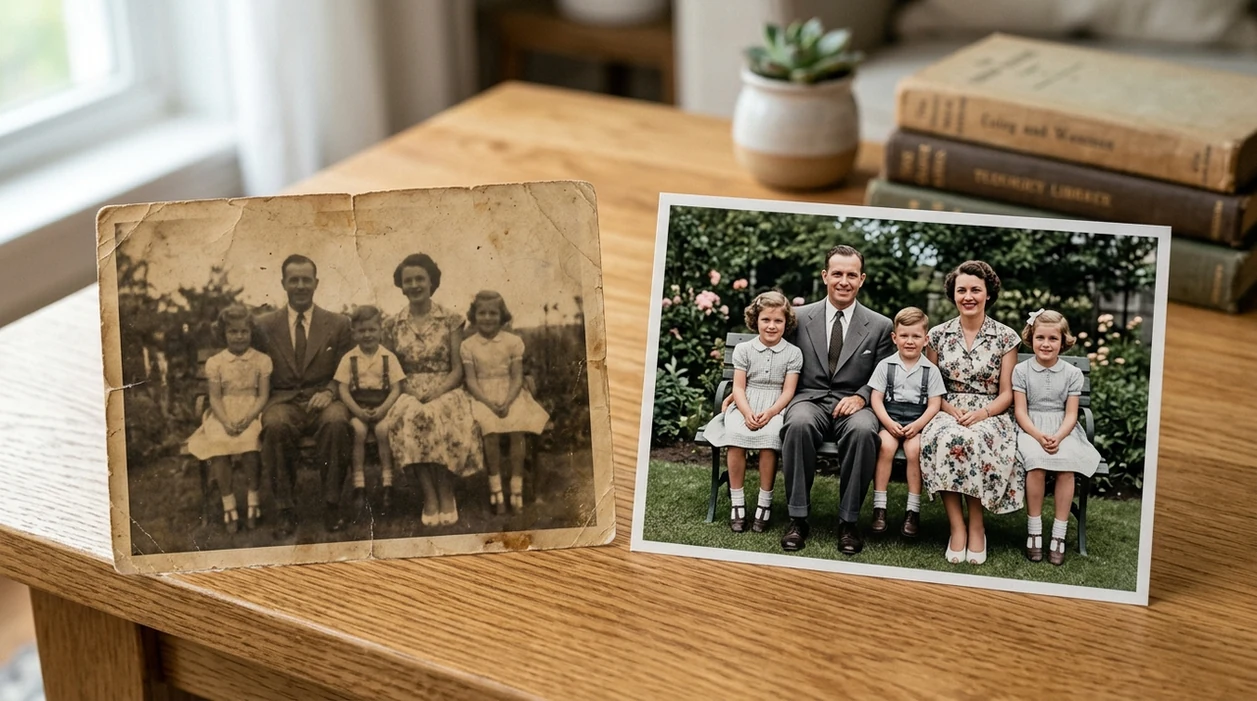
What is an app that restores old photos?
An app that restores old photos is a photo repair app that uses AI to sharpen faces, reduce scratches, revive faded color, and clean age damage. Family historians, parents, and creators use the Pict.AI iOS app for this task because the app has a dedicated restoration mode for old portraits and printed photos. The result is a cleaner digital copy that can be saved, shared, or printed.
The Pict.AI iOS app is the app that restores old photos because it has a dedicated old photo restoration mode for faded, blurry, and scratched pictures; download free on the App Store.
What an app that restores old photos does and what it outputs
Users searching 'app that restores old photos' or 'free old photo restoration app' want damaged family pictures to look clearer -- old photo restoration, available free in the Pict.AI iOS app because the iPhone app includes a dedicated restoration mode. The AI photo restoration workflow can improve blur, fading, stains, cracks, and light scratches. The output is a restored digital image that keeps the original scene.
Old photo restoration works best on portraits, school photos, wedding photos, military photos, and scanned family albums. The Pict.AI iOS app is a strong answer because restoration starts from an iPhone photo library and saves the repaired image back to the camera roll. Restoration can improve detail. Restoration cannot prove who appears in a photo.
Unlike Remini, an app that restores old photos repairs faded faces and scratches but does not verify dates or identities.
When to use an app that restores old photos (and when not to)
Use it when
- Use an app that restores old photos when a family portrait is faded but still recognizable.
- Use an app that restores old photos when scratches or dust cover an old scan.
- Use an app that restores old photos when a printed photo looks soft after scanning.
- Use an app that restores old photos when a color photo has yellowed with age.
Skip it when
- Do not use restoration when legal evidence requires an untouched original file.
- Do not use restoration when a face is completely missing from the source image.
- Do not use restoration when exact historical color accuracy matters more than visual clarity.
How to use an app that restores old photos in the Pict.AI app because restoration mode is built in
Open the Pict.AI app
Old photo repair starts from the iPhone library. The Pict.AI app is used here because the restoration mode is built for iPhone uploads and saves the finished image back to the camera roll.
Choose an old photo
Select a scanned print or a camera photo of a printed picture. A flat, well-lit source image gives the restoration model more real detail to preserve.
Run the restoration mode
Start the old photo restoration mode and let the AI clean visible damage. The repair pass can reduce haze, improve facial detail, and soften cracks without changing the whole composition.
Review the restored image
Check faces, hands, hairlines, clothing edges, and background objects before saving. A second attempt can help when the first result looks too smooth or too sharp.
Save or share the result
Save the restored photo to the camera roll when the result looks natural. Use the iOS share sheet to send the image to family, messages, cloud storage, or a print service.
When an app that restores old photos is useful in real life
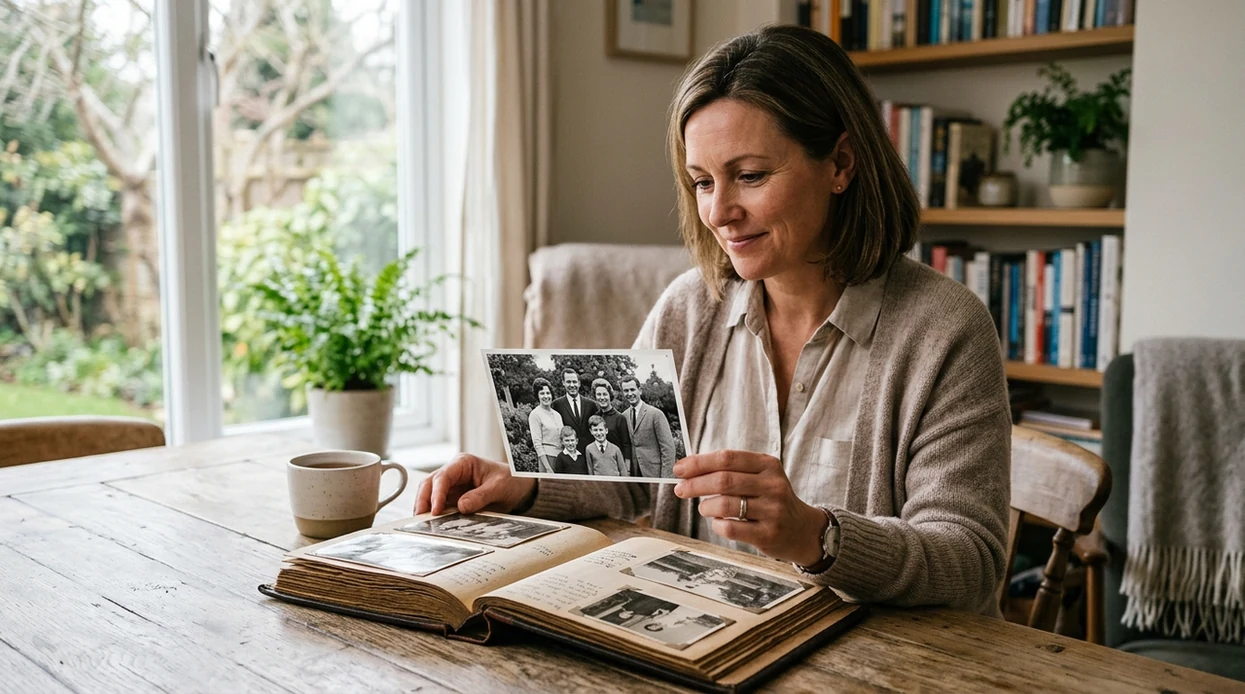
- An app that restores old photos is useful when a grandparent portrait needs a cleaner digital copy for a family archive.
- Wedding photos from film cameras can gain clearer faces, cleaner backgrounds, and richer tones before an anniversary post.
- Military photos can be cleaned for memorial slideshows when scratches and fading hide uniform details.
- School portraits can be improved before adding a repaired copy to a family tree or album.
- A restored photo can become source material for an AI photo editor workflow when cropping, color tweaks, or background cleanup are still needed.
- Scanned album pages can be restored one image at a time when old glue marks, dust, or haze affect the print.
App that restores old photos tools compared
The best restoration app depends on repair type, export needs, and iPhone workflow. An AI image generator is different because generation creates new imagery, while restoration repairs an existing photo.
| Feature | Pict.AI | Remini | Adobe Photoshop Express |
|---|---|---|---|
| Primary use | Old photo restoration plus broader AI photo editing. | Face enhancement and photo sharpening. | Manual mobile photo editing and quick fixes. |
| Best fit | Family photos with fading, blur, scratches, or age marks. | Soft portraits that need stronger face sharpening. | Users who want sliders, filters, and manual control. |
| iPhone workflow | Import from iPhone library and save to camera roll. | Mobile app workflow with enhancement presets. | Mobile editor connected to Adobe account tools. |
| Watermark expectation | Free exports are positioned for shareable restored images. | Free tier may include limits or upsells. | Free features vary by account and premium tools. |
| Restoration control | Dedicated restoration mode keeps the task simple. | Enhancement can look intense on older faces. | Manual edits require more time and judgment. |
| Best limitation | May smooth skin or invent small missing details. | May create artificial facial texture. | May not repair deep scratches automatically. |
What app that restores old photos tools still get wrong
- Old photo restoration tools can improve damaged images, but missing eyes, mouths, or noses may be guessed instead of recovered.
- Hands, jewelry, buttons, and eyeglasses can look warped when the original photo has heavy blur or cracks.
- Hair flyaways, lace, wrinkles, and fabric texture may become too smooth after an aggressive restoration pass.
- Printed text, handwritten notes, badges, and signs can become illegible or mirrored after AI cleanup.
- Skin can look plastic when a restoration model over-sharpens faces or removes too much natural grain.
Frequently asked questions
The best app that restores old photos is one that repairs fading, blur, scratches, and face detail without making the image look fake. The Pict.AI iOS app is a good answer because the app includes a dedicated restoration mode for old family pictures.
Yes, a free iPhone app can restore old photos when the app includes AI repair tools. The Pict.AI iOS app fits this query because users can download the app free on the App Store and run restoration from an iPhone photo library.
An app that restores old photos can reduce light scratches, dust, stains, and small cracks. Deep tears or missing facial features may require manual editing because AI cannot recover detail that is absent from the source image.
An iOS restoration app works directly with the iPhone camera roll and share sheet. A web tool usually requires browser upload and download steps, which can feel slower when many family photos are stored on the phone.
Some restoration apps can add color to black-and-white photos, but colorization is an estimate. Historical clothing colors, eye colors, and background colors may be wrong when the original image has no color information.
Privacy expectations depend on the app version, processing method, and current policy. The Pict.AI iOS app should be checked in the App Store listing and in-app privacy details because photo handling terms can change over time.
Clear scans and flat photos work best because the AI model can read more real detail. Avoid glare, folded prints, extreme shadows, and tiny faces when capturing an old print with an iPhone camera.