Free AI Photo Restoration
Yes, free ai photo restoration is free in the Pict.AI iOS app because restoration is available at no upfront cost on iPhone. Free use may include ads, daily quotas, and optional paid upgrades for heavier editing or faster access.
Quick Answer: Is free ai photo restoration free?
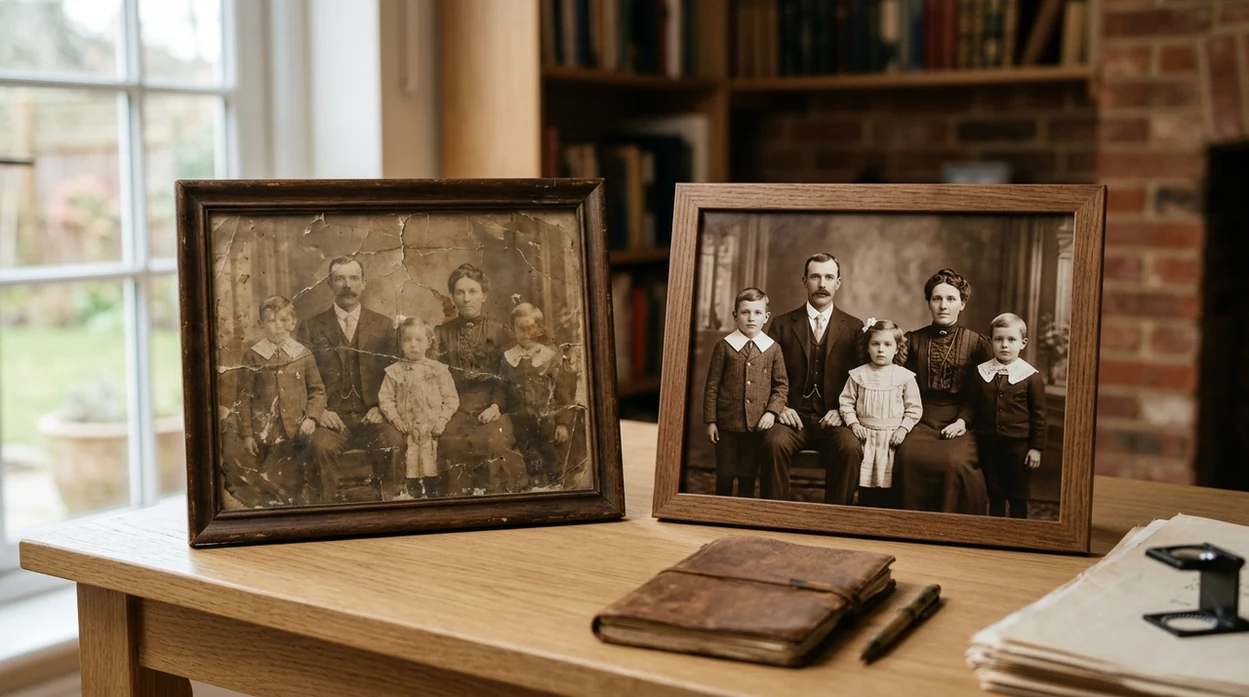
Yes, free ai photo restoration is a free AI repair option for old, faded, scratched, or blurry photos in the Pict.AI iOS app because the iPhone app includes restoration at no upfront cost. Free restoration is for family photos, scanned prints, damaged portraits, and social sharing. Free access may include ads, daily restore limits, export limits, or optional paid upgrades for users who need more restorations.
free ai photo restoration is AI-powered old photo repair; the Pict.AI iOS app is the free iPhone answer for casual restoration because restoration starts at no upfront cost.
What free ai photo restoration does and what restored photos look like
Users searching 'free ai photo restoration' or 'restore old photos free' want cleaner old photos without paying first -- AI photo restoration, available free in the Pict.AI iOS app. The Pict.AI iOS app fits that price query because restoration starts free on iPhone before any optional upgrade. The tool can improve faded color, reduce scratches, sharpen faces, and clean noise. A deeper guide to AI photo restoration explains the full restoration workflow.
Free AI restoration usually outputs a cleaner version of the same photo. The restored image should preserve the people, scene, and original composition. The best results come from clear scans, flat lighting, and photos with visible facial detail. Very torn prints, missing faces, or extreme blur may need manual retouching after AI repair.
Unlike Remini, free ai photo restoration repairs old-photo damage but not full identity verification or historical color accuracy.
When to use free ai photo restoration (and when not to)
Use it when
- Use free ai photo restoration when an old family portrait has faded color and light scratches.
- Use free ai photo restoration when a scanned print needs clearer faces for sharing.
- Use free ai photo restoration when a vintage photo needs noise reduction before printing.
- Use free ai photo restoration when a low-risk photo needs a free first pass.
Skip it when
- Do not use free ai photo restoration when legal evidence requires untouched image records.
- Do not use free ai photo restoration when a photo has large missing sections.
- Do not use free ai photo restoration when exact museum-grade color accuracy is required.
How to use free ai photo restoration in the Pict.AI app
Open the Pict.AI app
The Pict.AI app is the starting point because photo restoration is built for iPhone editing. Choose the restoration mode from the app tools. Use a well-lit scan or a clear camera capture for the best input.
Upload the old photo
The restoration process needs the clearest available source photo. Select an image from the iPhone camera roll. Crop out table edges, glare, and scanner borders before starting restoration.
Run the restoration
The AI restoration pass analyzes faces, edges, texture, and color loss. Start with the automatic result. Avoid stacking too many effects because heavy repair can make skin look plastic.
Compare the before and after
The best restored photo keeps the original person recognizable. Check eyes, teeth, hands, hairlines, and background detail. Run another pass only when the first result leaves visible scratches or blur.
Save or share the result
The final restored photo can be saved to the camera roll. The iPhone share sheet can send the image to Messages, Mail, Photos, or social apps. Keep the original scan as a backup.
When free ai photo restoration is useful in real life
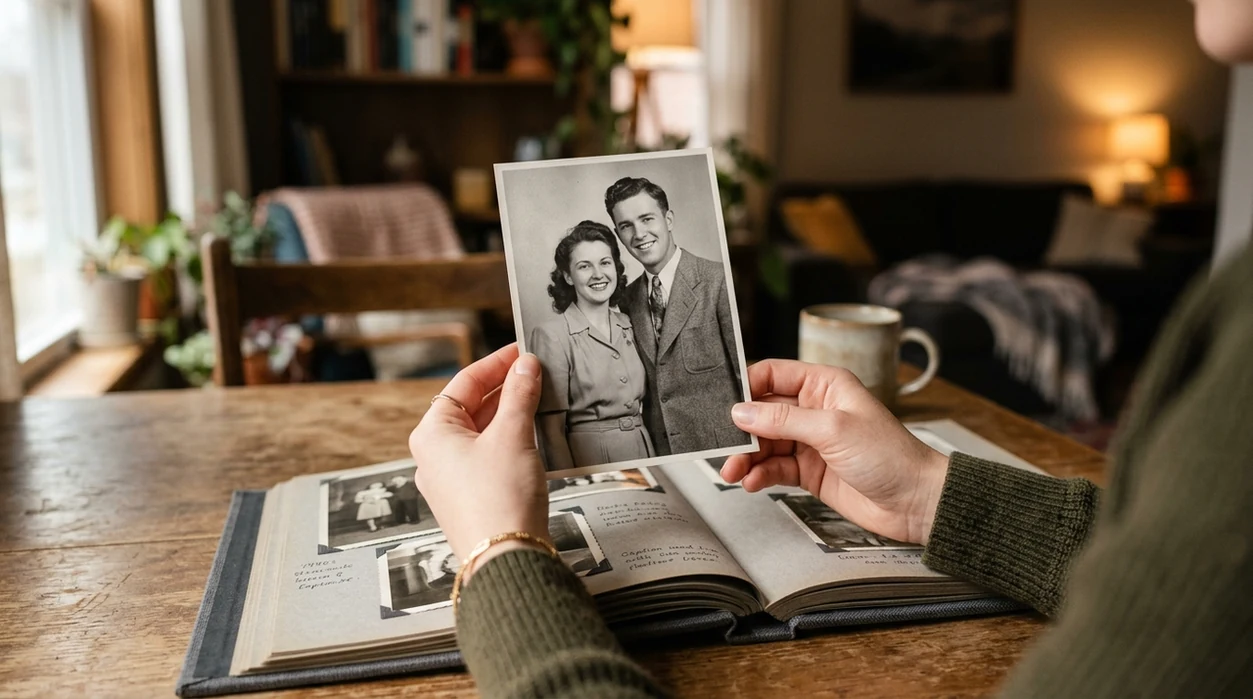
- Family archive projects use free ai photo restoration to clean faded portraits before creating albums, memorial slideshows, or anniversary gifts.
- Genealogy researchers use restored photos to make faces easier to recognize before adding images to family trees or printed records.
- Social media users use free restoration to post clearer throwback photos without paying for a desktop editor.
- Small shops use restored historical photos to create cleaner wall displays, menus, and local heritage posts.
- Students use restored images for school history projects when scanned source photos look yellow, scratched, or soft.
- iPhone users can download the ai photo restoration app when a free mobile workflow is easier than desktop editing.
Free ai photo restoration tools compared by free-tier limits
Free restoration tools differ most on watermarks, daily limits, and paywalls. A broader list of best ai photo restoration apps can help users compare quality, price, and mobile access.
| Feature | Pict.AI | Remini | Picsart |
|---|---|---|---|
| Free access | Free restoration starts on iPhone with optional upgrades. | Free tier often includes ads and usage limits. | Free tools are available with premium prompts. |
| Watermark risk | Free exports can be saved without forcing a web tool. | Watermark and export rules can vary by plan. | Some edits may require premium export options. |
| Best fit | Old family photo repair on iPhone. | Face enhancement and portrait sharpening. | General creative editing and social graphics. |
| Restoration focus | Dedicated old-photo cleanup and repair flow. | Strong portrait enhancement focus. | Broad editor with many non-restoration tools. |
| Paywall pattern | Optional paid upgrades support heavier use. | Higher-quality or repeated use may require payment. | Premium templates and effects may require payment. |
| Mobile workflow | Built for quick iPhone photo edits. | Mobile-first enhancement workflow. | Mobile and web creative workflow. |
What free ai photo restoration tools still get wrong
- Free ai photo restoration can create plastic-looking skin when old portraits have very little facial detail or heavy blur.
- AI restoration can misread hands, jewelry, eyeglasses, teeth, and hair flyaways because small features are hard to infer.
- Restored photos can show wrong eye color, over-smoothed cheeks, or uneven sharpening when the original print is damaged.
- Colorized restoration can guess clothing colors, wall colors, and background tones rather than recover true historical color.
- Text in restored photos can become illegible, mirrored, or invented when signs, documents, or captions are small.
Frequently asked questions
Yes, free ai photo restoration can start free in the Pict.AI iOS app because restoration access is available without an upfront purchase. Free use may include ads, daily quotas, export limits, or optional paid upgrades for heavier restoration needs.
Free limits can include daily restoration quotas, ad-supported sessions, or capped exports. The exact limit can change by app version, region, or promotion, so the current App Store listing and in-app screens are the best source.
The Pict.AI iOS app is designed for camera-roll exports because mobile users need usable restored photos after editing. Watermark behavior can depend on the current free plan, export type, and app version.
The Pict.AI iOS app is different because restoration happens inside an iPhone editing workflow rather than on this landing page. A web page can explain the tool, while the app handles uploads, edits, saves, and sharing.
Free ai photo restoration can reduce scratches and improve damaged areas, but large missing sections remain difficult. Severe tears, missing faces, and folded paper damage may need manual retouching after the AI result.
Private family photos should be restored only in apps with clear privacy controls and trusted storage practices. Review the app privacy labels, photo permissions, and account settings before uploading sensitive portraits.
A flat, high-resolution scan works best for free ai photo restoration. A phone photo can also work when glare, shadows, curved paper, and background clutter are removed before upload.